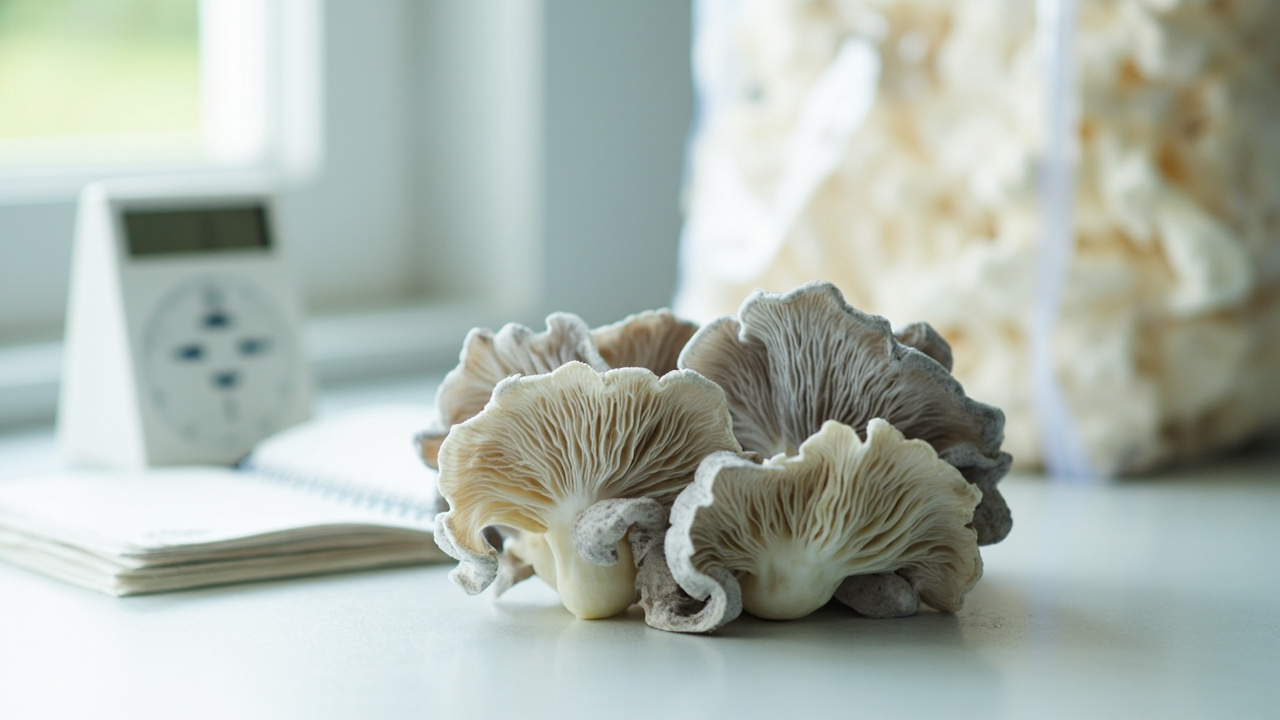
Your grow bag is on the kitchen counter and the box promises seven days. Count from the day it shipped and you’ll call a healthy kit broken a week before anything is actually late.
Quick answer
Ready-to-fruit gourmet kits give a first harvest 14 to 21 days from the X-cut. Oysters pin in one to two weeks, lion’s mane in 10 to 21 days, shiitake in three to six weeks. Spawn-in-a-bag runs are slower: 10 to 21 days of colonization first. Logs are on another clock: 8 to 18 months. Start counting the day you open the bag, not the day it shipped, and write the date you stop waiting.
What this timeline is - and what it is not
What this is
A calendar for kitchen-scale mushroom growing: how long each stage runs from a ready-to-fruit kit, grain spawn in a bag, a log, or a flush you’ve already cut, and how that shifts by species. It answers what you ask before you buy and while you wait.
What this is not
Not a step-by-step grow manual: cutting, misting and the X-cut live in how grow kits work. Not a species grow guide - start with oyster. Smelly or stalled blocks belong to the contamination overview and pinning problems.
Who this timeline is for
- You bought a kit and want to know what week you eat.
- You’re mid-wait and need to know if nothing yet is normal.
- You’re choosing between a kit and a bag.
- You grow one species and want a second.
Not for a farm or a lab protocol. Skip this if you’re comparing grow rooms.
Do this first
Stop-loss discipline before the calendar: the cheapest mistake is waiting past the window while a block goes bad.
Mark the day you open the bag
Day zero is the day you cut the X, or the day you inoculate the bag - not the day it shipped. Write the date on the bag with a marker. Shipping can eat a week.
Check the room before you trust the clock
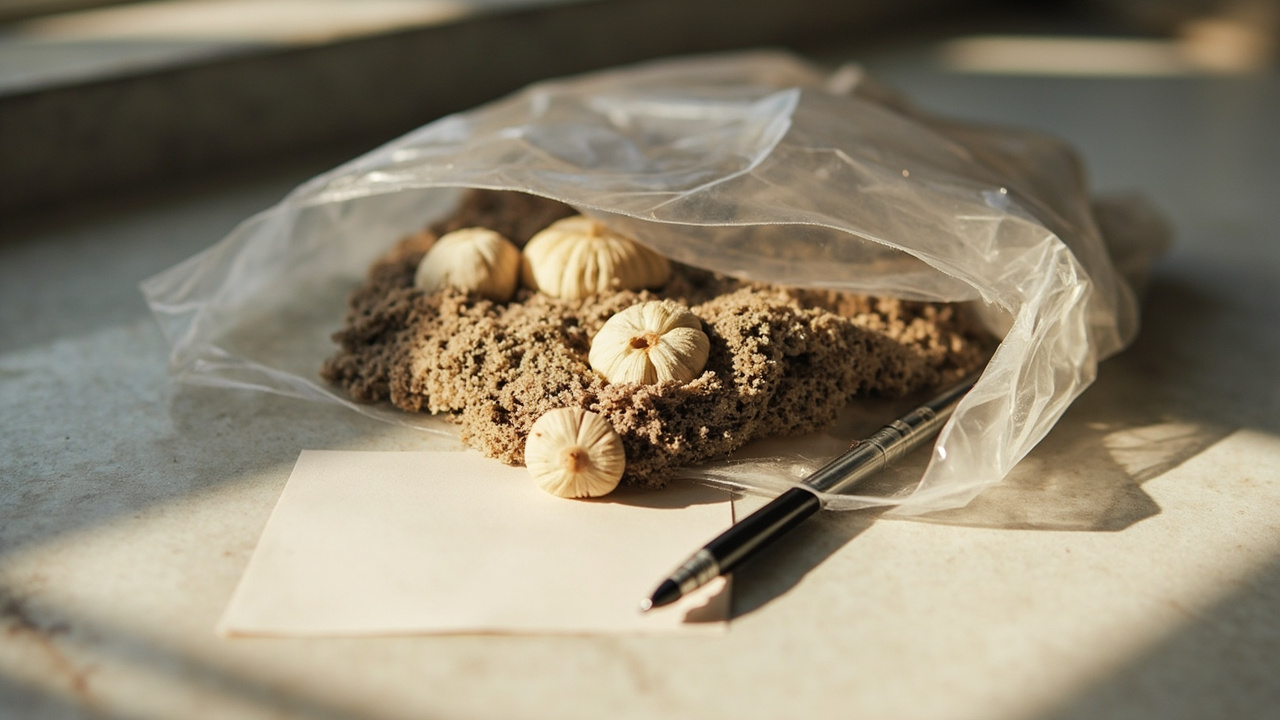
A hygrometer next to the block tells you whether the room explains the wait. Our humidity and misting tools page puts oyster pins at 7-10 days only when the cut face stays glossy. The TempPro TP50 hygrometer turns slow into a number.
Write the give-up date on the bag too
Before you start, write the date you stop waiting. A harvest-in-7-days label is the fastest case, and a block that misses its window with a sour smell isn’t going to turn around.
The clock by setup type
Four clocks, one rule: every window starts from the day you begin, and every number is quoted from a page on this site.
Ready-to-fruit kit
Your job is fruiting, not colonization. An RTF kit arrives colonized, pins often show in 7-14 days after the cut, and the first harvest lands 14-21 days from the cut - our how to choose a grow kit page owns that number. Our oyster page defaults to the 4 lb blue oyster block.
Spawn in a bag
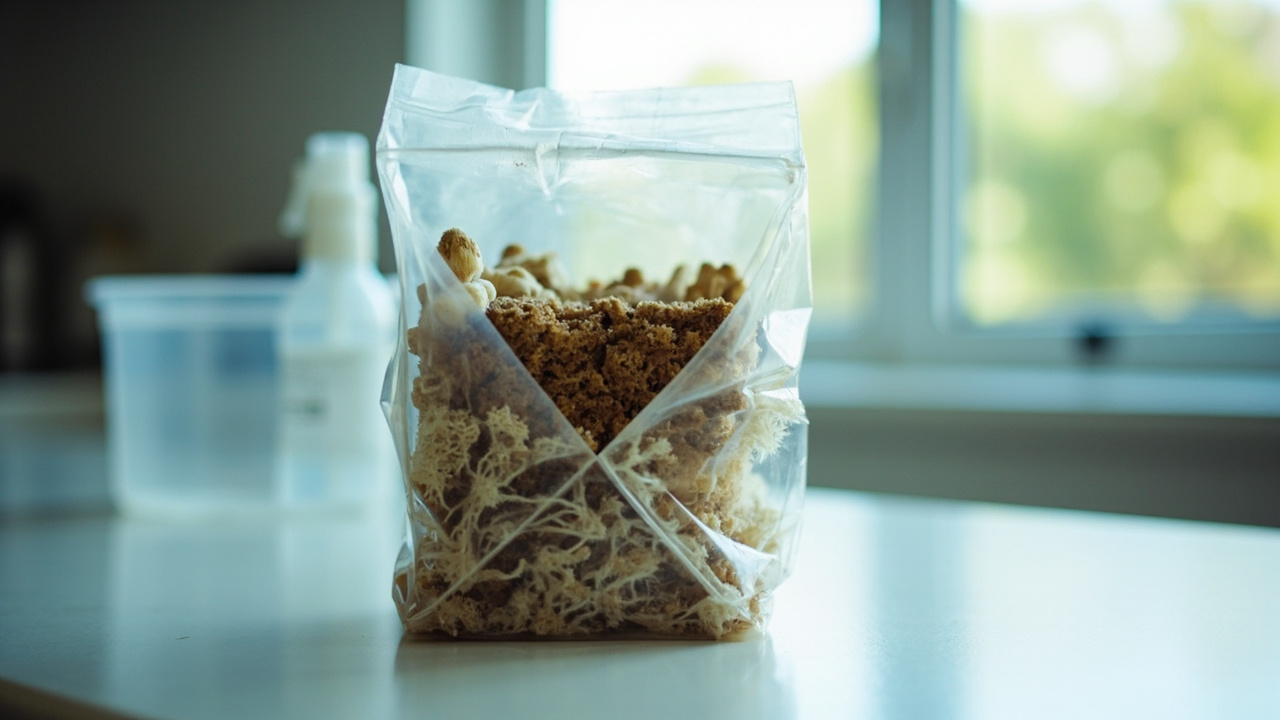
A bag starts one stage earlier: 10 to 21 days to full white at 65-75°F, then a first harvest 14 to 35 days from the start, per our grow bags page. The Myco Labs 5-grain spawn bags skip the mixing step, not the clock.
A log
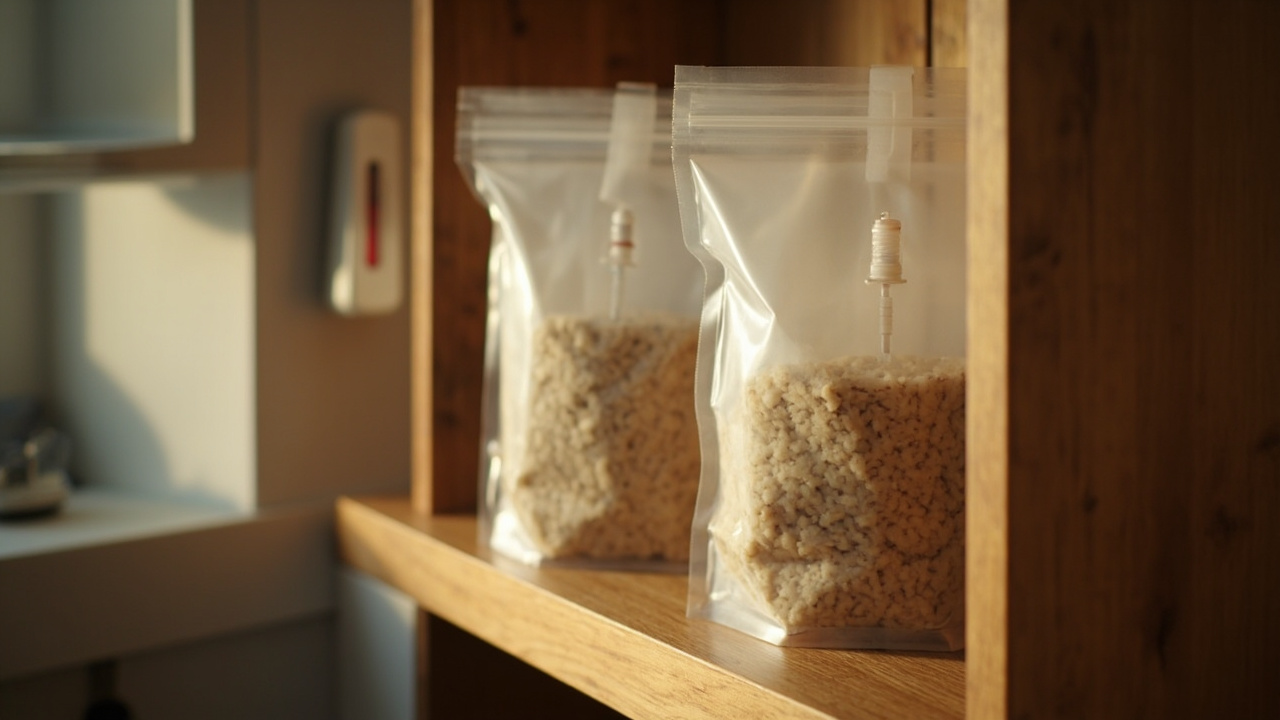
Logs are the one clock that leaves the kitchen: 8-18 months of colonization before the first fruit, per our growing mushrooms on logs page.
A second flush
After the first harvest the block needs a quiet week: 12-24 hours in cold water, then 5-7 days of rehydration, then 7-14 days before the next pinning - our mushroom second flush page. The second flush is smaller than the first.
How long by species
Per-species windows, each quoted from that species’ own page, so the numbers can’t drift apart.
Oyster - the fastest kitchen window
Pins often show within one to two weeks of the X-cut, and blocks run ready 7-10 days from pinning, per our oyster page and mushroom harvest guide. The 4 lb blue oyster block is the one most people buy first.
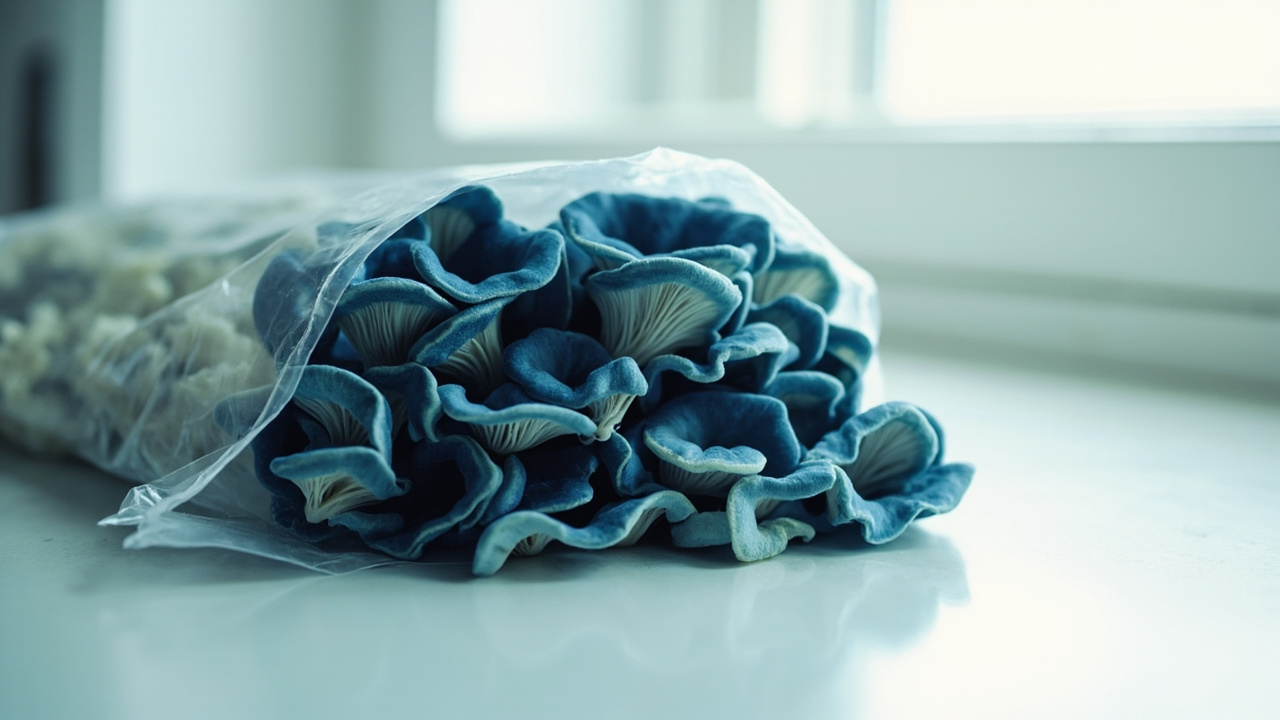
Pink oyster - warm rooms, short window
Pins in 7-14 days from a ready-to-fruit block, and it tolerates 70-85°F rooms that stall other species - see our pink oyster page.
Lion’s mane - the middle window
Pins often appear 10 to 21 days after you open a ready-to-fruit kit, with harvest around 14 to 28 days, per our lion’s mane page. The 4 lb lion’s mane log kit runs at this pace.
Pioppino - slower than oyster, worth it
10 to 21 days from opening the bag to first pins is normal, sometimes longer in a cool kitchen - our pioppino page. No pins after three weeks, with everything dialed in, deserves the pinning problems walkthrough.
King oyster - thick stem, late pins
Many blocks wait 2 to 3 weeks after the cut before showing pins, often 14-21 days, and it wants a cooler counter - see our king oyster page.
Maitake - block route or log route
From a ready-to-fruit block, pins in roughly 2-4 weeks. From log plug spawn the same species stretches to 6-12 months before the first fruiting - our maitake page.
Reishi - the slowest kit species
Three to six weeks from cutting the bag to visible antlers or conks, and don’t toss the block before six weeks unless it shows green mold or smells sour - our reishi page.
Shiitake - three to six weeks, on purpose
A shiitake kit wants its soak or cold-shock window followed to the letter, then often three to six weeks from setup to harvest-ready caps. The shiitake page owns the number. If flavour matters more than speed, the Root Mushroom Farm shiitake kit is the slow-clock pick.
Wood ear - plan on weeks
A pre-inoculated kit is commonly quoted at 6 to 8 weeks to first flush. From spawn, budget 28 to 35 days to colonize and another 7 to 14 days after that - our wood ear page.
Chestnut and enoki - where we publish no window
Our chestnut page and enoki page publish no day count - these aren’t ten-day species, so read a kit’s number as the vendor’s fastest case. Wine cap is a different case: an outdoor bed species whose page gives an 8-16 week window after the spawn date - the wine cap page.
How to choose - if-then tree
Start at Q1 and follow the branch your setup actually is. Every branch ends in a number or in a problems page.
Q1 - What are you growing from?
- Branch A - A ready-to-fruit block: the clock starts at the cut, pins in 7-14 days, harvest 14-21 days later.
- Branch B - Grain spawn you’ll inoculate: 10-21 days of colonization, then 7-14 days to pins, harvest 14-35 days from the start.
- Branch C - A colonized log: 8-18 months of colonization, then a fast crop.
- Branch D - A block with pins already: you’re in the last leg - oyster runs 7-10 days from pinning to harvest.
Q2 - Which species is in the bag?
- Branch E - Oyster or pink oyster: the fastest clock on the page, 7-14 days to pins.
- Branch F - Lion’s mane or pioppino: 10-21 days to pins, harvest 14-28 days.
- Branch G - King oyster, shiitake, or reishi: 14-21 days up to three to six weeks. Slow by design, not broken.
- Branch H - Wood ear, or a species with no published window: weeks, and the species page owns the number.
Q3 - Are you past the window with nothing to show?
- Branch I - Past the window and still no pins: work through pinning problems - humidity first, then airflow, then light.
- Branch J - Green or spreading patches: isolate the block now and read green mold before deciding anything else.
- Branch K - Sour smell, wet rot, or slime: isolate it and read the contamination overview. Don’t open it on the counter.
- Branch L - Caps dry, stems stringy: alive but the air is wrong. Fix humidity with humidity and misting tools.
Q4 - Are you waiting on a second flush?
- Branch M - First flush already cut: 12-24 hours soak, 5-7 quiet days, then 7-14 days to the next pins. The flush will be smaller.
- Branch N - Nothing cut yet and pins still firm: leave it. A ready-to-fruit block often waits for you to come back.
Q5 - How many kits should you start?
- Branch O - One species, one kit: learn one clock before you add a second.
- Branch P - Two species at once: pick one fast (blue oyster) and one slow (shiitake) so the windows don’t collide. The kit vs DIY page has the side-by-side.
Four ways a slow kit turns into a lost kit
Four symptoms worth checking before you blame the clock, and each one ends at a problems page. The contamination checker sorts the symptom for you.
No pins after the window
The quiet failure: the block looks fine and nothing comes. Humidity is the first suspect - our humidity page puts oyster pins at 7-10 days only when the face stays glossy - then airflow, then light.
Green or black patches
Isolate the block on a tray, don’t open it in the kitchen, and read green mold. A seven-day label doesn’t survive contamination.
Sour smell or wet rot
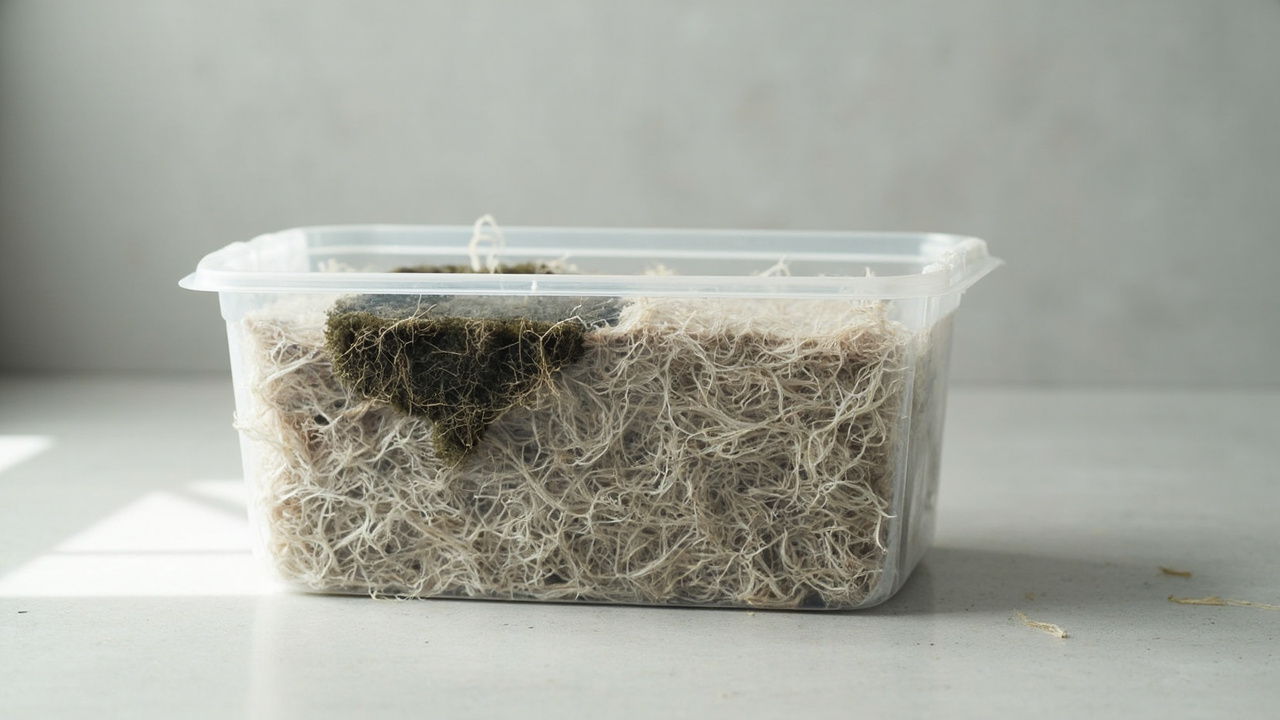
The smell check comes before the visual check. Sour or sweet decay means the block is done. The contamination overview has the keep, isolate, or discard call, and sterilization pressure cookers explains why the bag stage is where most of this starts.
Dry caps and stringy stems
Alive but parched: the face dried between mists, so the cap edge browned and the stems stretched for air. Fix the misting rhythm, not the wait: the same block may be fine in a week. A continuous fine-mist bottle covers twice-daily misting without flooding the cut.
What to buy when you want a shorter wait
Three kits with three different clocks, plus the two tools that decide whether you hit them. Every one was checked in stock on 2026-11-20.
The fast window - oysters
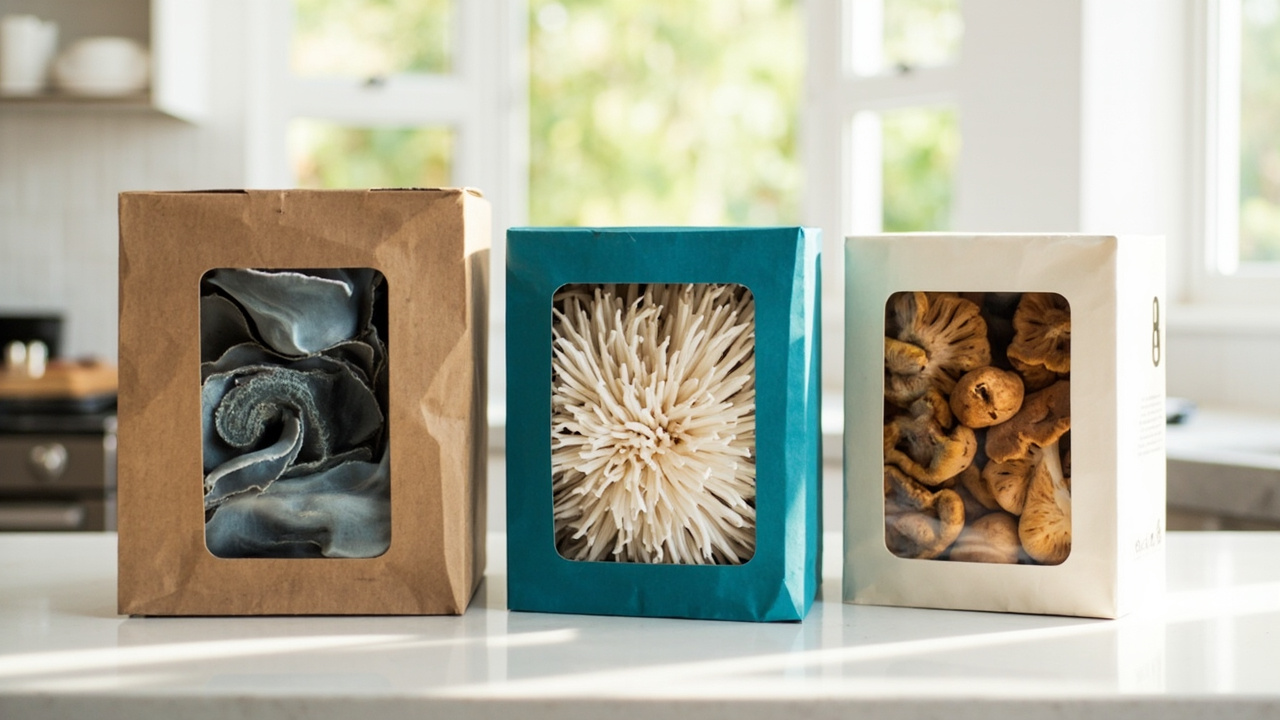
The North Spore blue oyster 4 lb block is the default first box on our oyster page: pins in one to two weeks, harvest 7-10 days after pinning.
The middle window - lion’s mane
The 4 lb lion’s mane log kit pins in 10-21 days and harvests around 14-28 days.
The slow window - shiitake, on purpose
The Root Mushroom Farm shiitake kit runs three to six weeks from setup to harvest-ready caps.
Starting from spawn instead of a kit
The Myco Labs 5-grain spawn bags are the DIY branch: your clock starts at colonization, so read the bag window first. The kit picker points you at the right starting format.
The two tools that decide the window
A TempPro TP50 hygrometer tells you if the room is the reason, and a continuous fine-mist bottle covers twice-daily misting across a two-week pinning window.
Common mistakes
Five of them, and the third one costs the most.
Mistake 1 - Counting from the shipping date
The clock starts when you open the bag. Shipping can eat a week, and counting from the label makes a normal kit look broken.
Mistake 2 - Misting harder because you’re waiting
Waiting isn’t a humidity problem. Over-misting floods the cut face and drowns pins, so keep the face glistening, not dripping. A continuous fine-mist bottle gives you twice-daily misting without a sprayer’s stream.
Mistake 3 - Recutting the bag because nothing happened
A second X doesn’t move the schedule, and an open bag lets the room’s air and spores in. Keep the bag on and read how grow kits work for the one-cut method.
Mistake 4 - Buying a second kit to fix a first kit
If the first block is slow, a second kit doesn’t fix it - a hygrometer does. Buy the second kit for a second flush of food, not a rescue.
Mistake 5 - Waiting past the window because it must be working
The clock is a diagnostic. Past the species window, take the exit branch in the decision tree.
Related
- First grow: your first gourmet grow kit, grow gourmet mushrooms in an apartment.
- Kit mechanics: how grow kits work, kit vs DIY, how to choose a grow kit.
- DIY branch: grow bags, grain spawn preparation, straw substrate, hardwood pellets substrate, liquid culture.
- Conditions and problems: fruiting conditions, humidity and misting tools, fruiting chamber for gourmet kits, contamination overview, green mold, pinning problems.
- After the harvest: mushroom harvest, mushroom second flush, how to store fresh mushrooms.
Key takeaways
- Day zero is the day you open the bag, not the day it shipped.
- A kit gives a first harvest 14-21 days from the cut; a bag adds 10-21 days of colonization.
- Oysters pin in one to two weeks, lion’s mane in 10-21 days, shiitake and reishi in three to six weeks.
- The window is a diagnostic: past it, take the exit branch instead of waiting.
- Write the give-up date on the bag when you write the start date.
- A ten-dollar hygrometer tells you if the room is the problem.