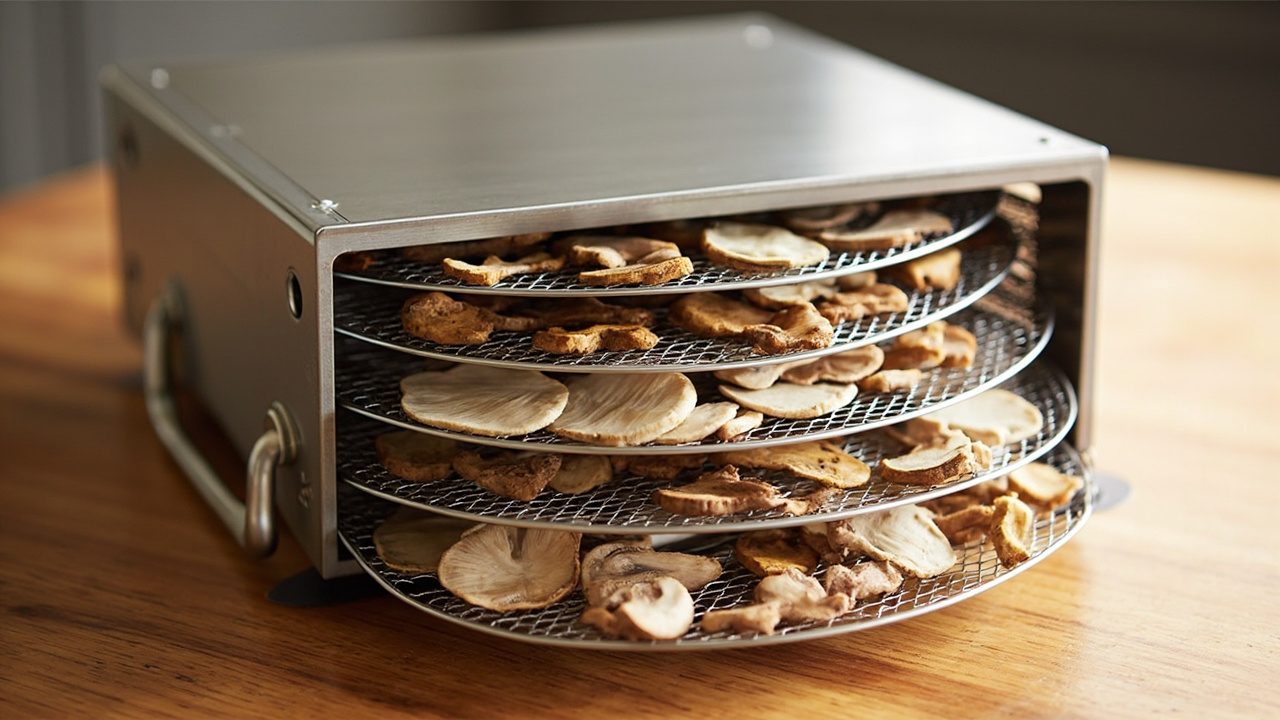
You just brought in a flush of oyster or shiitake clusters and now you’re wondering if a dehydrator is the right next purchase or if the kitchen counter and a paper bag will get the job done for one harvest. The short answer: a single oyster flush in a dry climate dries on a rack in 24 hours without a dehydrator, but multi-flush growers and humid-kitchen growers need one within a week. Below is the home dehydrator decision, from “rack-dry no machine” to “premium steel-tray 48-hour timer,” for one to four harvests a season.
Quick answer
You don’t always need a dehydrator for one kitchen gourmet block - a single oyster flush dries on a rack in 24 hours. A dehydrator earns its keep when you want to store shiitake or lion’s mane past a week, when ambient humidity sits above 60% for days at a time, or when you run two or more harvests back to back. Pick adjustable temperature capped at 165F with trays you can clean.
What drying does for a gourmet harvest
Why moisture is the single biggest storage risk
Moisture is the storage enemy in two ways: it lets aerobic mold grow on the slice after a few days, and it lets bacterial pockets form inside dense caps that look dry from the outside. Dehydrators push moisture below 10% in a controlled cycle and lock the slice in a state where neither microbe can grow. The oyster species page covers how oyster harvest size affects slice thickness, and the shiitake species page covers how dense caps need lower temperatures and longer cycles.
Why moisture is the storage enemy
Dried mushrooms stay safe and flavorful as long as no free water is available for microbial growth. Slice 3-5 mm thick and dry until cracker-dry for months of storage. The thicker the slice, the longer the dry cycle; slice too thin and you’ll scorch.
How “cracker dry” reads in your hand
A cracker-dry slice snaps or breaks cleanly when bent. Leathery slices that bend without breaking still hold moisture and will soften in storage within days. If a slice bends more than 30 degrees before breaking, send it back for another hour. Pair this with the dried mushroom storage container guide for the post-dry handling that keeps slices stable for months.
Why ambient drying works in dry climates and fails in humid kitchens
Ambient drying on a rack in a dry climate works for one flush. The same setup in a humid kitchen stalls at leathery and grows mold within a week. A dehydrator’s low heat and steady airflow moves the moisture out faster than ambient air can. If you’re seeing fuzz on stored slices, defer to the contamination overview to tell storage mold from salt crystals.
What a dehydrator is - and what it isn’t
A dehydrator holds 95-160F for hours
A dehydrator is a low-temperature box fan with adjustable heat and stackable trays. It moves dry air across each slice for 6-12 hours until moisture drops below 10%. The adjustable temperature is the feature that makes it safe for edible mushrooms - a fixed-temperature dehydrator can scorch the outside of dense slices while leaving the inside wet.
A dehydrator is not an oven set to “warm”
Oven heat is uneven and hard to keep under 170F. Some “warm” settings run 200F+, which denatures mushroom flavor and creates off-aromas. If you’ve been oven-drying for years, switch to a dehydrator for the consistency.
A dehydrator is not a freeze-dryer
Freeze-dryers cost $200+ and produce a different texture. Home freeze-drying is out of scope for a kitchen gourmet grower.
When to buy one - decision tree
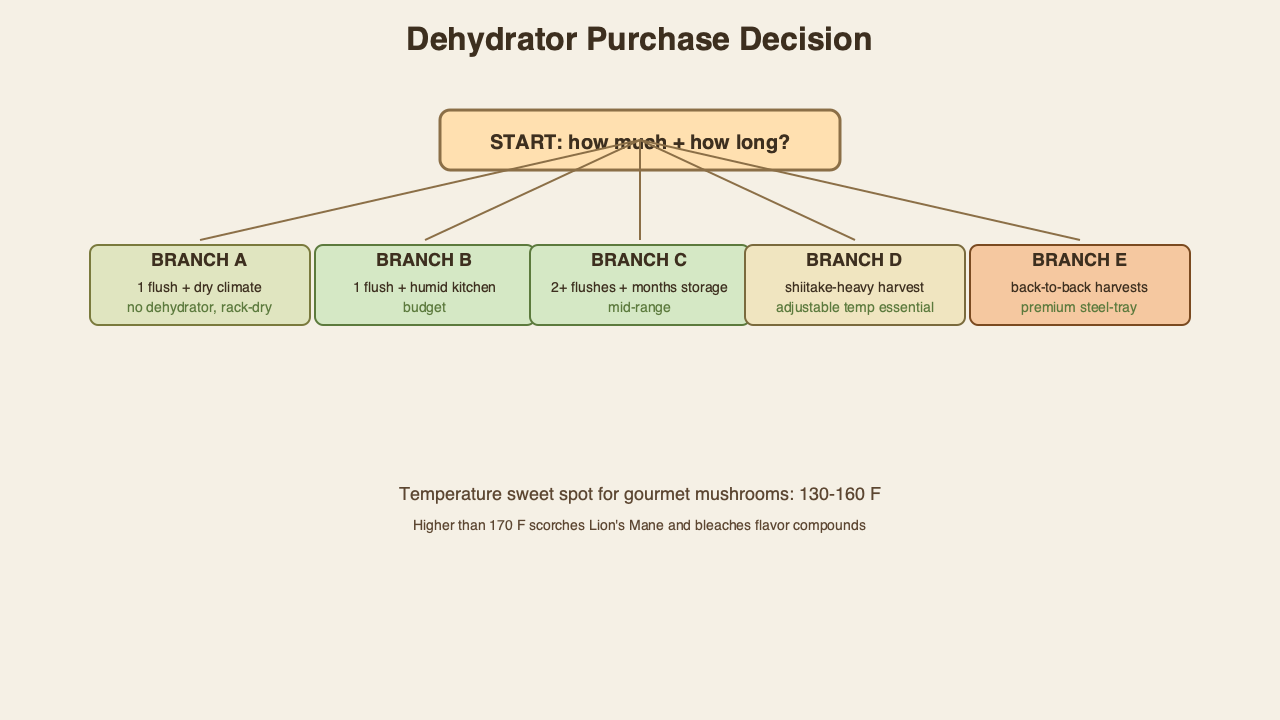
ROOT: How many flushes are you drying at once and how long do you want to keep them?
- Branch A - one flush, dry climate, eat within a week → no dehydrator.
- Branch B - one flush, humid kitchen, want to store → entry-level dehydrator.
- Branch C - two flushes, want to plan a year of dried gourmet mushrooms → mid-range dehydrator.
- Branch D - shiitake-heavy harvests → adjustable temperature essential.
- Branch E - back-to-back lion’s mane and oyster, frequent harvesting → premium with stainless steel trays.
Branch A — One flush, dry climate, eat within a week
No dehydrator. Rack-dry on a clean kitchen towel for 24 hours, store in a paper bag in the fridge. This is the cheapest path and works for one flush per month in a dry climate.
Branch B — One flush, humid kitchen, want to store
Entry-level dehydrator. Adjustable temperature, 5 BPA-free trays, $35 entry point. The Rosewill 5-tray adjustable dehydrator is the lowest-cost adjustable-temp unit that runs cool enough for shiitake and lion’s mane.
Branch C — Two flushes, want to plan a year of dried gourmet mushrooms
Mid-range dehydrator. The Cosori 5-tray dehydrator at 165F fits one flush per batch and has the cleanest temperature dial of the bunch.
Branch D — Shiitake-heavy harvests
Adjustable temperature is essential - shiitake needs lower temperatures for denser slices. The Elite Gourmet SlimStore digital dehydrator and Magic Mill premium both fit this branch.
Branch E — Back-to-back lion’s mane and oyster, frequent harvesting
Premium with stainless steel trays. The Magic Mill 5-tray stainless steel dehydrator resists staining from mushroom pigments when you’re running two harvests a week. Back-to-back growers also benefit from the digital timer: load it before bed and rotate trays at hour 4 the next morning without missing the cycle.
Branch F — Pure shiitake operation (specialty case)
If you’re growing shiitake almost exclusively and plan to slice and dehydrate several blocks a month, prioritize adjustable temperature over tray count. Shiitake slices need 125F for the first 4 hours and 145F for the second 4 hours to dry through the densest caps. The Elite Gourmet SlimStore digital timer handles this profile without manual intervention.
Temperature and tray-height decisions
How temperature affects each species differently
Oyster tolerates the widest range: 95-165F is fine. Shiitake wants the middle: 130-150F lets the dense caps dry through without scorching the edges. Lion’s mane is the most sensitive: 125F is the practical floor for whole pom-poms and 140F for sliced caps. Running lion’s mane at 165F produces a brown, leathery outside with a wet inside - the case for adjustable-temp units.
Why 165F is the upper safe cap for edible mushrooms
Above 170F, mushroom proteins denature and produce off-aromas. Cap home dehydrators at 165F for any edible mushroom. Some commercial dehydrators run hotter - don’t use those on edible mushrooms.
Why lion’s mane needs ~125F for denser slices
Lion’s mane pom-poms are dense. At 125F they dry evenly without scorching the surface. Higher temperatures leave the outside dry while the inside stays leathery. If your dehydrator runs at one fixed temperature, lion’s mane is the test species.
Why tray height matters for shiitake caps
Standard tray gaps (about 1 inch) fit shiitake slices 3-5 mm thick. Whole shiitake caps need deeper trays or a horizontal placement. Slice shiitake caps to 4 mm thick for even drying on standard trays.
What you’ll need — purchase-mapped
Budget adjustable (Rosewill)
Lowest-cost adjustable-temperature dehydrator. Runs cool enough for shiitake and lion’s mane slices without scorching. The Rosewill 5-tray BPA-free dehydrator is the cheapest entry to adjustable drying.
Best overall (Cosori)
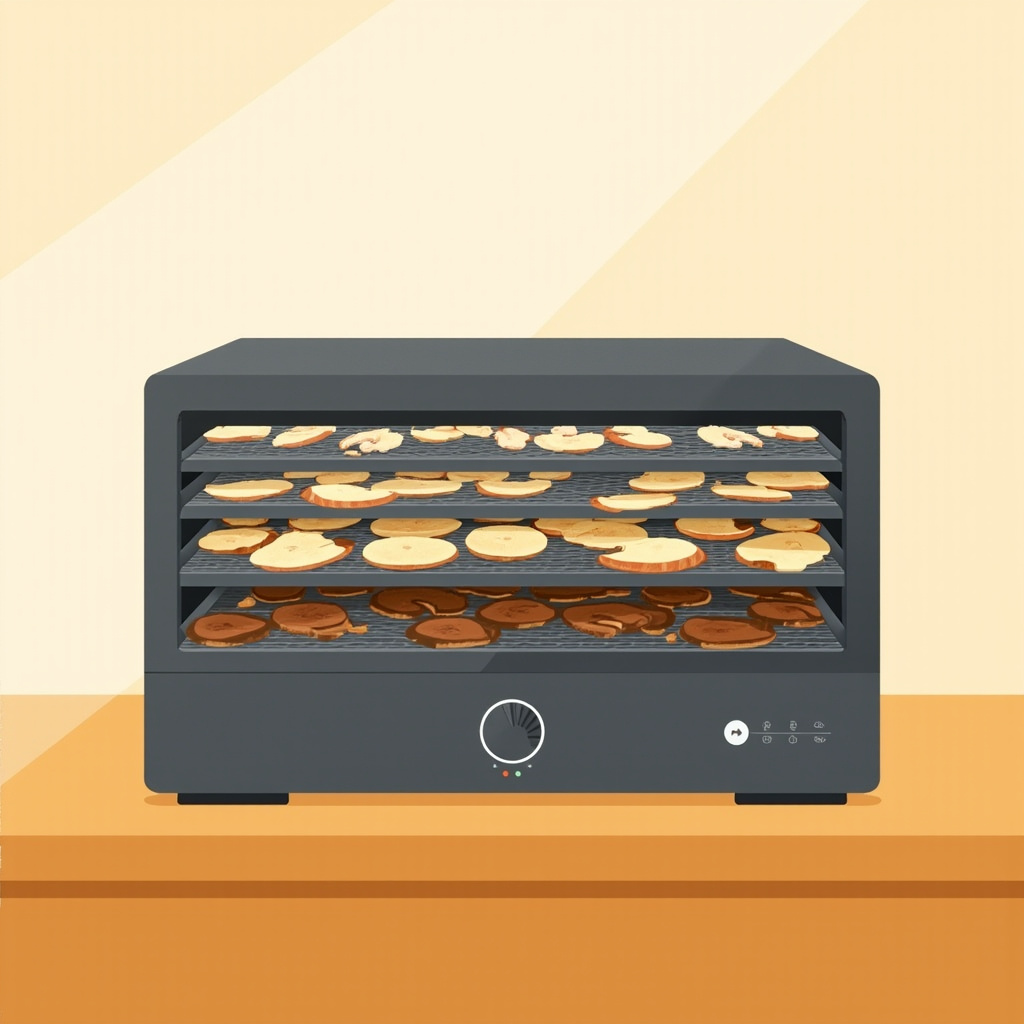
Capped at 165F - the upper end of the safe edible-mushroom window. Five round trays fit a single oyster or shiitake flush in one batch. The Cosori 350W dehydrator at 165F is the Branch C default.
Digital basic (Elite Gourmet)
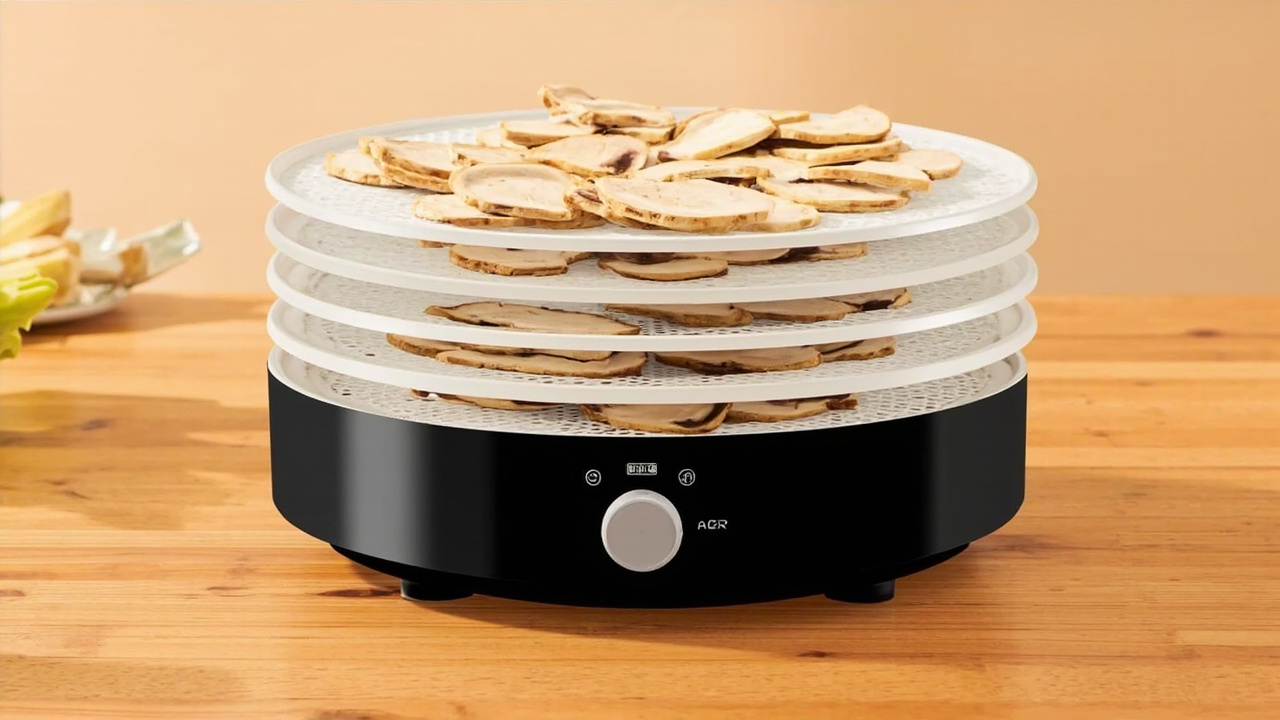
Digital timer and 48-hour range for the grower who wants to start before bed and forget it until morning. The Elite Gourmet SlimStore 48-hour dehydrator handles overnight runs without manual restart, and the SlimStore trays stack flat in a kitchen drawer between uses.
Premium with steel trays (Magic Mill)
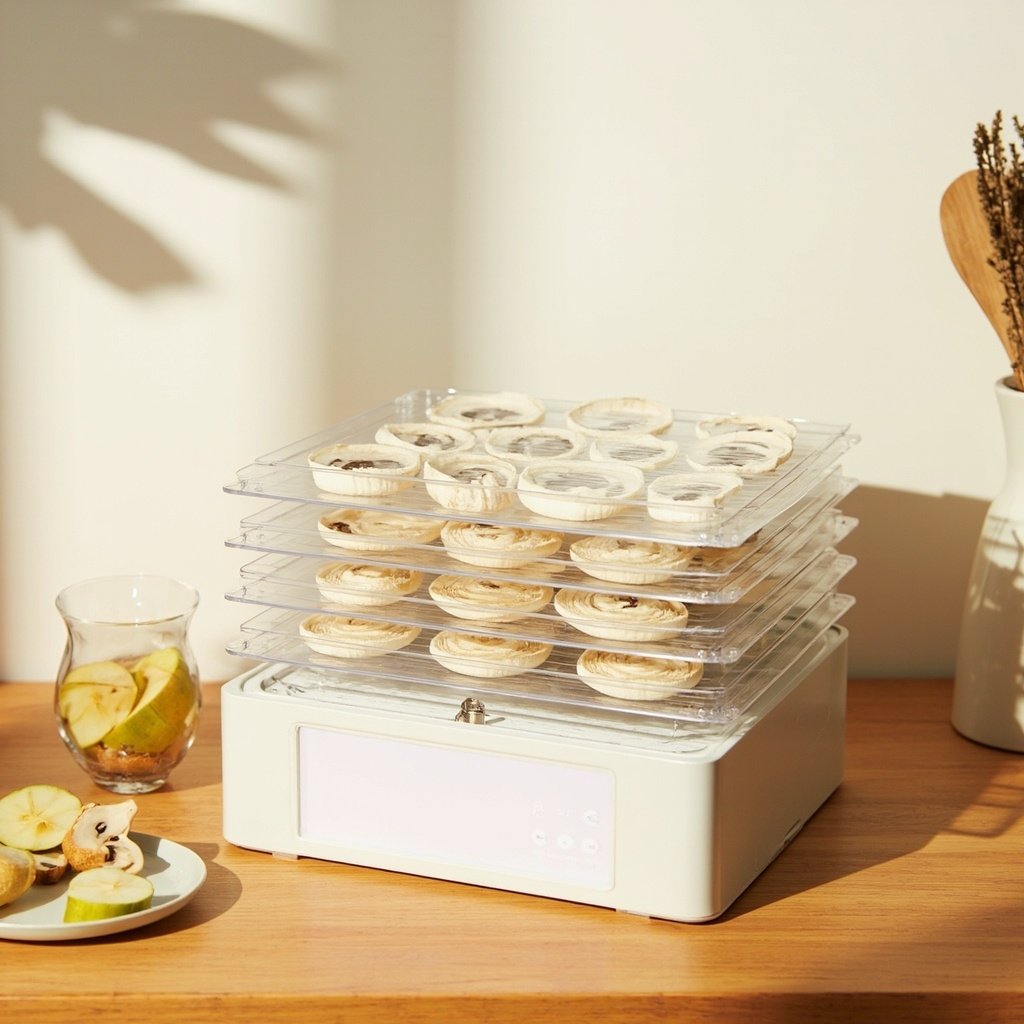
Stainless steel trays that resist staining from mushroom pigments and a 48-hour digital timer. The Magic Mill 5-tray stainless steel dehydrator is the Branch E pick for back-to-back harvests. The humidity and misting tools page covers how to keep the harvest’s surrounding RH low during drying, and the spawn-storage methods page covers how to keep the next block’s spawn between flushes.
Loading order for the cleanest dry
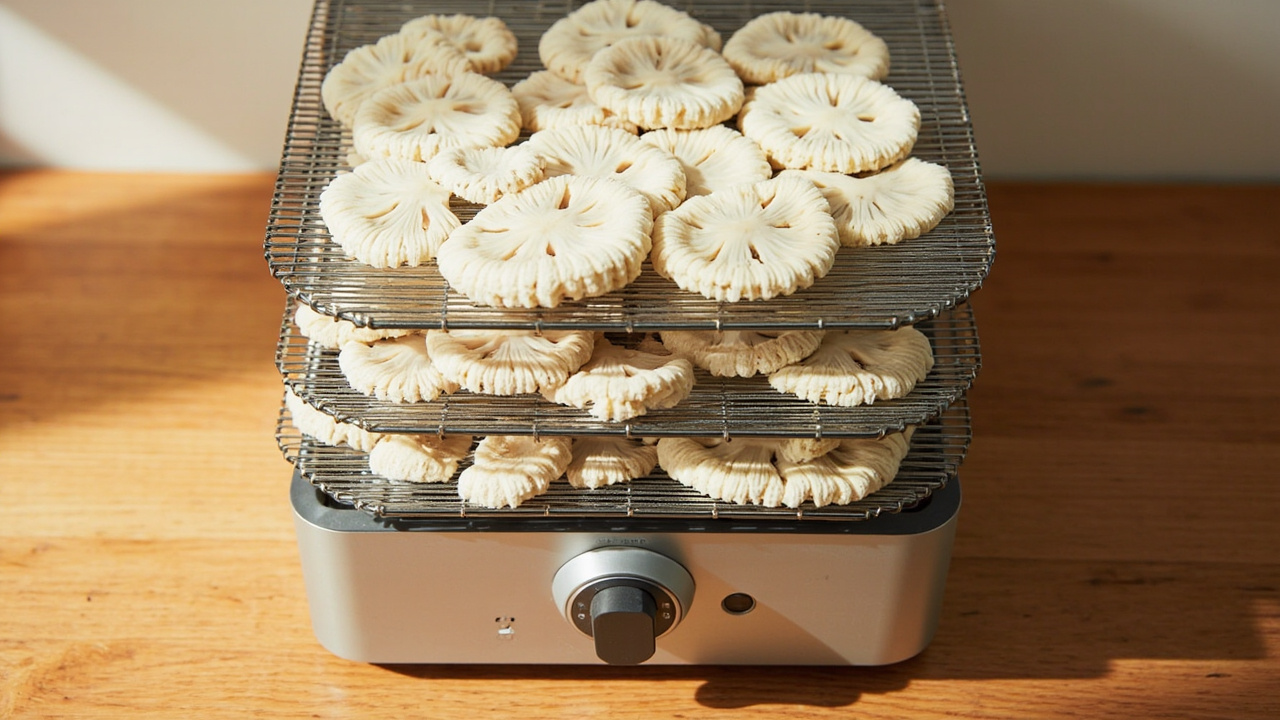
Load the trays thickest slice down, thinnest slice up. Thicker shiitake caps need more time at the bottom where heat is lowest; thin oyster strips finish faster at the top. Stagger slices so air flows between them - overlapping slices trap moisture and dry unevenly, leaving a tacky center even when the edges look cracker-dry. Rotate the trays every 2 hours if your dehydrator has a hot-spot near the back heating element.
How to dry a flush
Why “wet slices in wet trays” is the most common failure
New growers often skip the pre-drain step and lay freshly washed slices directly on the trays. The slices are at 95%+ moisture at that point and the trays pool water instead of moving air. Pre-drain the slices on a clean kitchen towel for 15-20 minutes before loading the trays. This single step cuts total dry time by 30-60 minutes.
Slice 3-5 mm thick for even drying
Thinner slices (under 3 mm) scorch at the edges in 4-6 hours. Thicker slices (over 5 mm) stay leathery inside. The 3-5 mm band dries evenly in 6-10 hours at 135F. Drop sliced caps onto silicone mesh liners so they don’t stick to round trays or fall through square grid openings. The shiitake species profile covers the dense-cap slicing case that drove the 3-5 mm band.
Rotate trays at hour 4
The bottom tray usually runs 5-10F warmer than the top. Rotating them at hour 4 evens out the dry without you having to babysit. A digital timer that beeps at hour 4 is the only feature worth paying for if you’re drying overnight.
Cool in the dehydrator with the door cracked for 30 minutes
Why you don’t want to bag straight out of the dry cycle
Storage from dry to bag in under 10 minutes
Slices come out of the dry cycle at 130F+ and pack with residual heat. Bagging them while warm builds condensation inside the bag, which raises moisture and grows mold. Cool them on the trays with the door cracked for 30 minutes before bagging.
Common mistakes
- Setting the dehydrator above 170F for edible mushrooms - denatures flavor and creates off-aromas. Stick to the 95-165F window, lower for lion’s mane.
- Slicing shiitake caps paper-thin - paper-thin slices scorch and lose umami. Aim for 3-5 mm so the slices bend before they break.
- Stopping the dry cycle while slices still feel leathery - leathery slices absorb ambient moisture within days and grow soft in storage. Finish until cracker-dry.
- Cleaning trays with bleach and skipping the rinse - bleach residue off-gasses onto dried mushrooms. Rinse thoroughly or use 3% hydrogen peroxide.
- Storing dried mushrooms in open bags the same day - let slices cool in the dehydrator with the door cracked for 30 minutes before bagging, or condensation forms inside.
Key takeaways
- A budget adjustable dehydrator covers one flush in a humid kitchen without scorching.
- A mid-range dehydrator at 165F is the default for two-flush months.
- A digital dehydrator with 48-hour timer handles overnight runs without restart.
- A premium stainless steel dehydrator resists staining from dense species, and the SlimStore tray design keeps the Elite Gourmet out of the way between uses.
- Always cool slices in the dehydrator with the door cracked for 30 minutes before bagging.