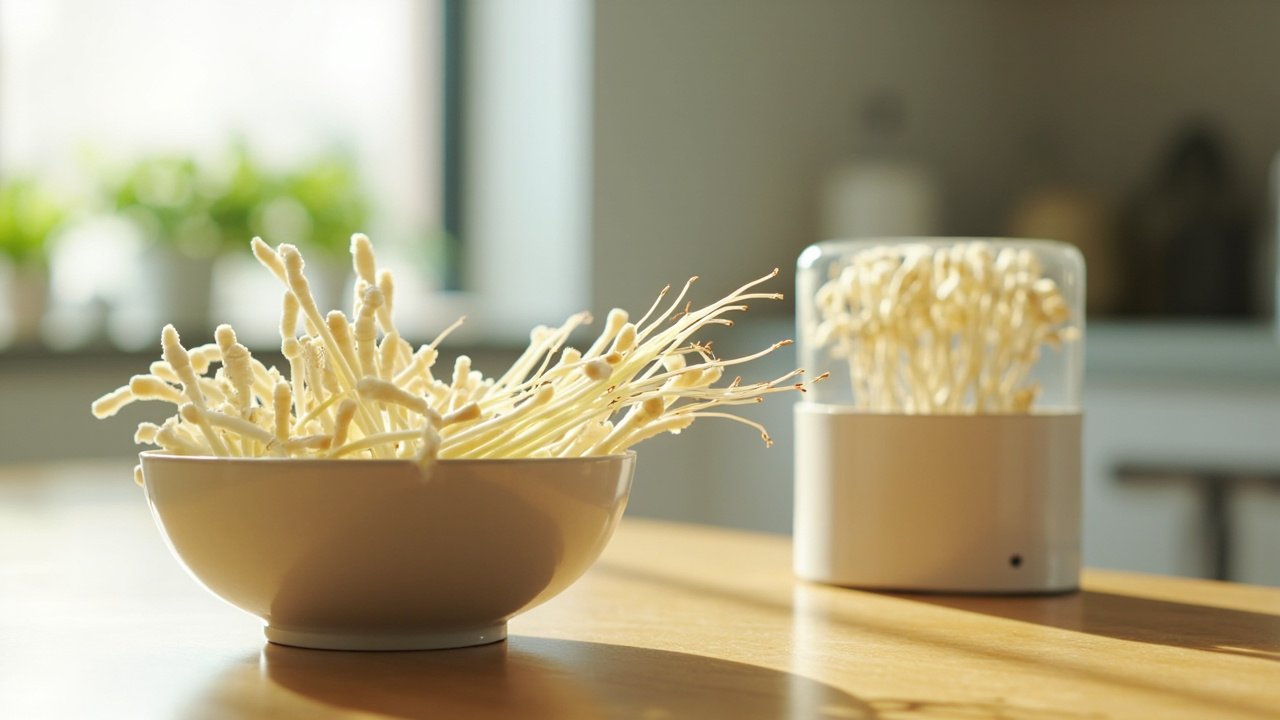
Enoki is a cool, slender gourmet edible — not a warm oyster counter crop. Start kit-first when you can, or run oyster once, then come back for cool fruiting stems you can cook.
Quick answer
Enoki is a cool, slender gourmet edible best grown at home from a ready-to-fruit kit or cool fruiting bag, not as a warm counter crop like oyster. Path A starts with an enoki kit if available; otherwise grow a forgiving oyster kit first, then Path B liquid culture or bags. Expect longer pin waits, high humidity, and cooler rooms near 50–60°F for kitchen-quality stems you can cook in soups and stir-fries.
What this is / is not
What this guide is
A culinary species hub for growing gourmet edible enoki at home, kit-first (Path A) with a short bags and culture Path B. Kitchen-scale expectations: cool fruiting, fine mist, cook-your-harvest. You’ll leave with a decision tree, conditions ranges, and honest limits for apartments.
Enoki rewards growers who can hold a cooler corner and a dew-only mist habit. It punishes heater-vent shelves and sink-sprayer floods. Read this as a food-growing map, not a gear catalog.
What this is not
Not a brain, nerve, or immune supplement article. Not an actives grow guide. Not a monotub lab SOP. Not a promise that home enoki will clone supermarket white sticks under warm dry HVAC.
If you need a first edible win this month with fewer cool-room demands, start with oyster and come back. This page assumes you want enoki specifically as food, not as a wellness story.
Decision tree
Branch A — First gourmet grow, warm apartment, want edible success fast
Choose an oyster kit first (start with oyster if enoki is too cool-demanding), then return to enoki.
Branch B — Cool room available (~50–60°F class) and you want enoki now
Path A enoki ready-to-fruit kit if you can buy one. Follow cut → mist → wait → harvest.
Branch C — Enoki kits unavailable locally
Path A oyster practice kit → Path B enoki liquid culture or bags after one clean harvest.
Branch D — Pins stall or face dries out
Leave species hub timing anxiety. Open when pins stall and humidity and misting tools.
Branch E — Grey web or green patches appear
Stop species tweaks. Route to cobweb mold or green mold.
Why grow this
Culinary reasons (food only)
Enoki (Flammulina velutipes) is a slender gourmet edible used in soups, hot pots, and quick sautés. Mild flavor, crisp stems when grown cool — a kitchen species choice, not a supplement page. If you’re here for dinner projects, you’re in the right place.
Cultivation personality
Prefers cooler fruiting than oyster. Rewards patience and humidity discipline. Looks different from store enoki if grown with more light (color and thickness vary) — still culinary. Don’t throw a harvest because it isn’t pure grocery-store white.
Home enoki often shows more color and thicker stems under household light. That’s normal kitchen growing, not a failed kit. Judge firmness and clean smell for cooking quality.
What this page will not do
No brain, nerve, or immune health chapters. No actives content. No monotub-as-default lab path. We stay kit- and bag-scale for gourmet edible harvests you can cook.
Is this right for you?
Good fit
You can offer a cooler room or closet (~50–60°F class) or accept slower warm-room results. You already mist consistently or will follow Path A kit habits. You want a gourmet edible beyond basic oyster. You’re willing to cook what you grow instead of chasing supermarket-identical looks.
Better start elsewhere
First-ever grow in a hot dry apartment with no cool corner → start the first gourmet kit walkthrough and an oyster kit. You need harvest in about 10 days with fewer variables → oyster is more forgiving.
If your only free space is a heater vent shelf, enoki will teach frustration before technique. Move the project or change the species first.
Still unsure? Run one oyster kit through harvest. If that felt calm, enoki is a fair second species. If that felt chaotic, fix placement and misting before you buy cool-room gear.
Path A: From a grow kit
Path A is the honest apartment route. Learn cut, mist, wait, and harvest before you buy culture gear. Cool fruiting is easier when the daily loop is already boring.
If you can buy an enoki RTF kit
Open per label (usually a top cut or X). Keep the bag as a humidity shell. Place in bright indirect light, cooler spot, away from HVAC. Don’t park it on a heater vent and then wonder why stems stall.
If enoki kits are scarce — oyster first bridge
Run a gourmet oyster kit to learn cut → mist → pins → harvest. A compact Back to the Roots oyster kit is the usual skill bridge. Then return here for enoki-specific cool fruiting. Baseline habits live in how kitchen grow kits work.
We’ve found oyster-first saves more enoki projects than any special tent. Once you can keep a face dewy without flooding, cool fruiting gets much less dramatic.
Daily care on Path A
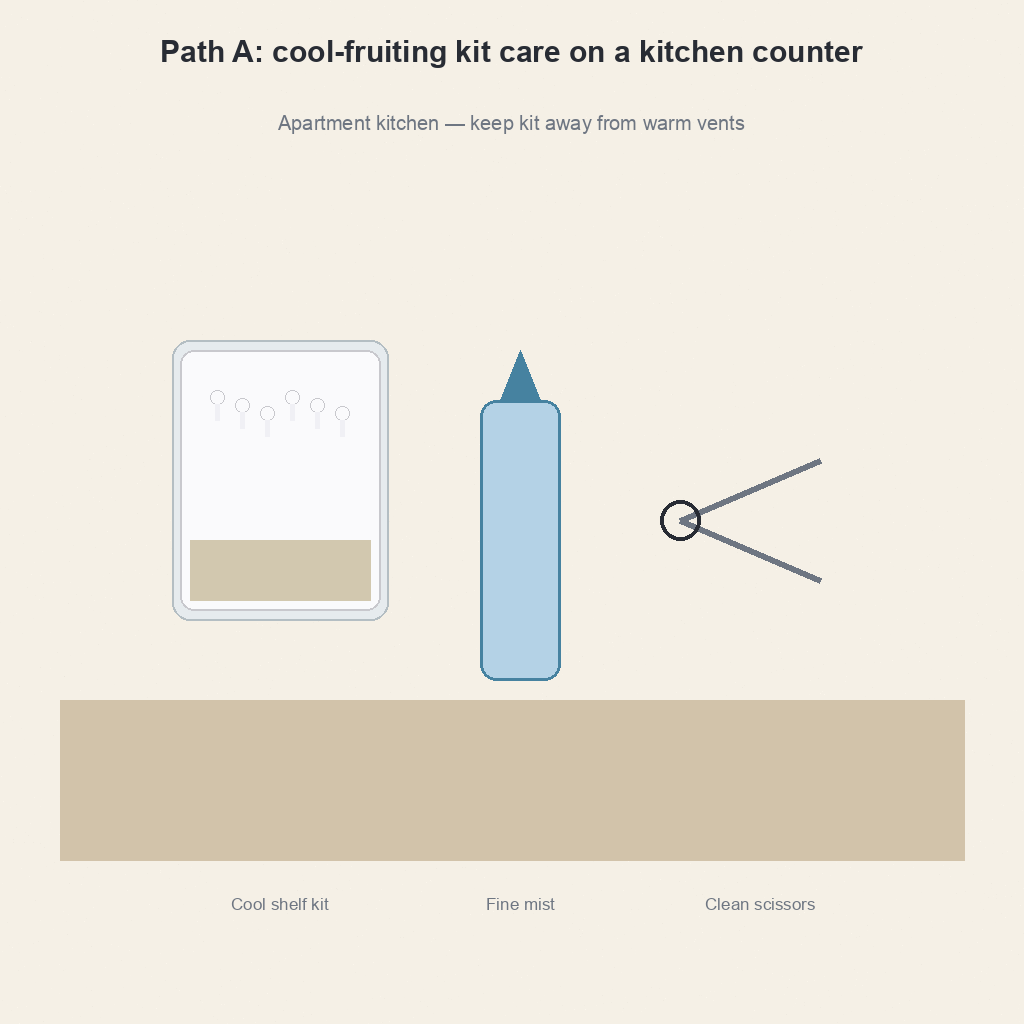
Fine mist for surface dew. Watch for pins as tiny dense dots; enoki pins can look different from oyster shelves. Patience: often longer than oyster 7–10 day marketing windows. Keep a simple log: date opened, room feel, mist count. You’ll spot dryness patterns faster than guessing.
Harvest Path A
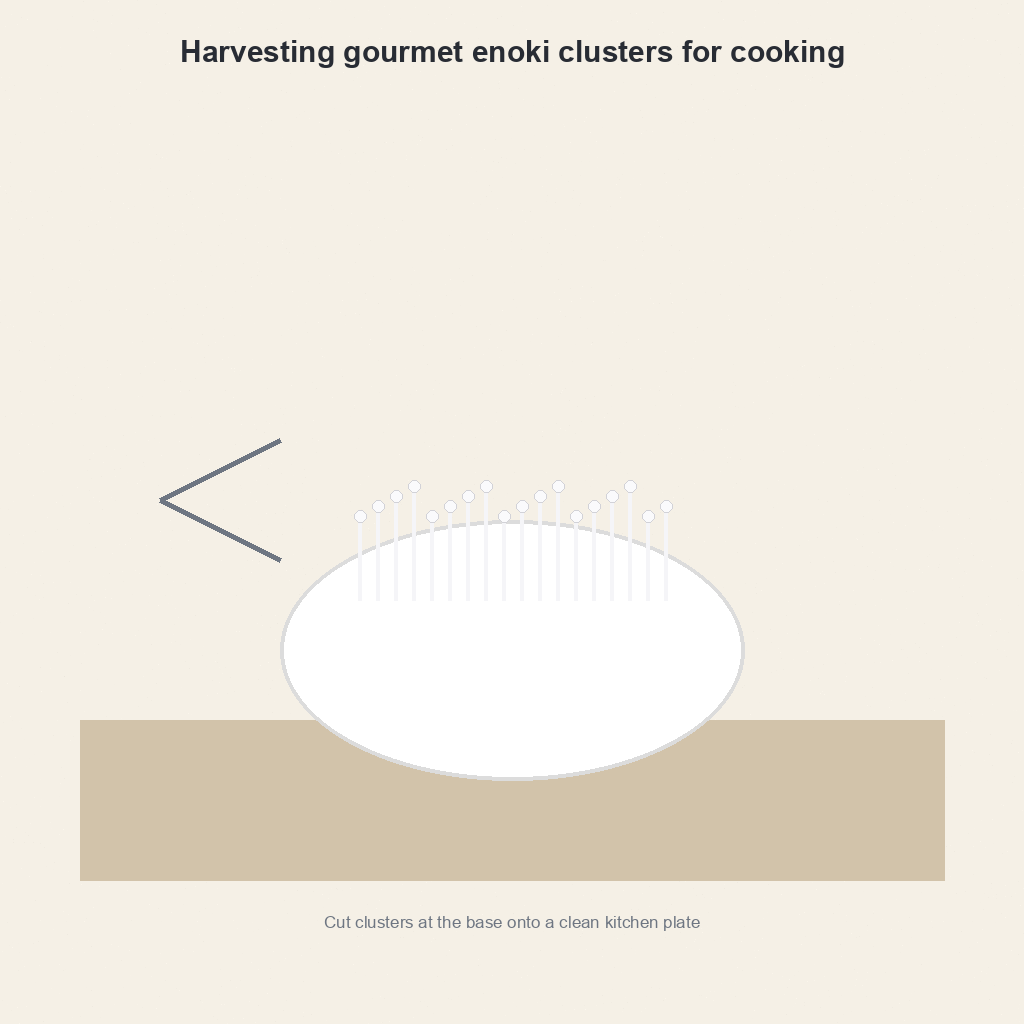
Cut clusters at the base when stems are long enough for cooking and caps still small. Second flush possible with rest and light mist after harvest — a fine mister keeps the face dewy without flooding cut sites. Cook what you cut the same day when you can — crisp stems are the point.
Path B: Bags / next level
When to leave pure kit mode
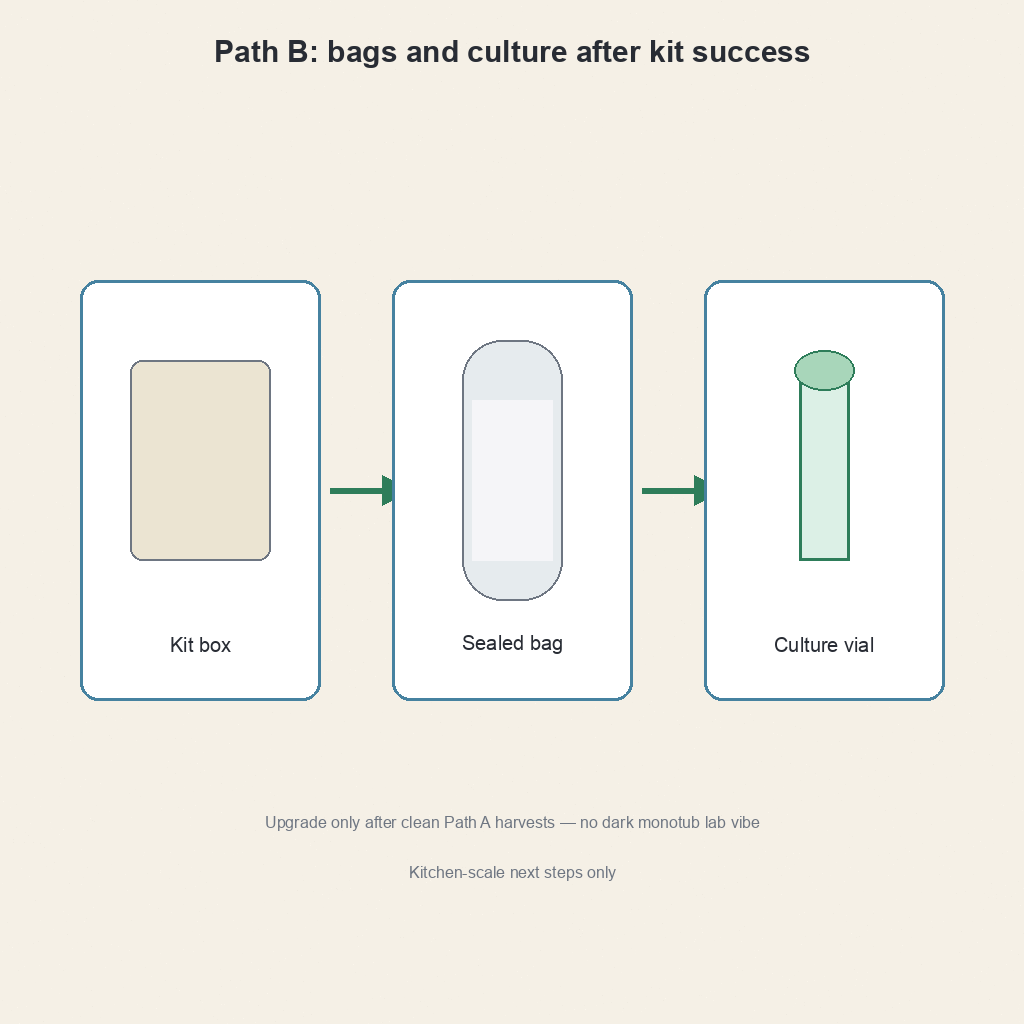
After at least one clean gourmet harvest and stable misting habits. If you’re still panicking at white fluff, stay on Path A.
Liquid culture / spawn route (high level)
Enoki liquid culture is a Path B supply role — not day-one apartment gear. An enokitake liquid culture syringe pairs with the Path B bags after kit success method page. No monotub main path. Path B assumes you already know how to keep a fruiting face clean and dewy.
Logs are out of scope as primary
Enoki can be cultivated many ways. This hub stays kitchen and bag scale. Outdoor methods exist; they’re not the apartment default on this page.
Conditions table
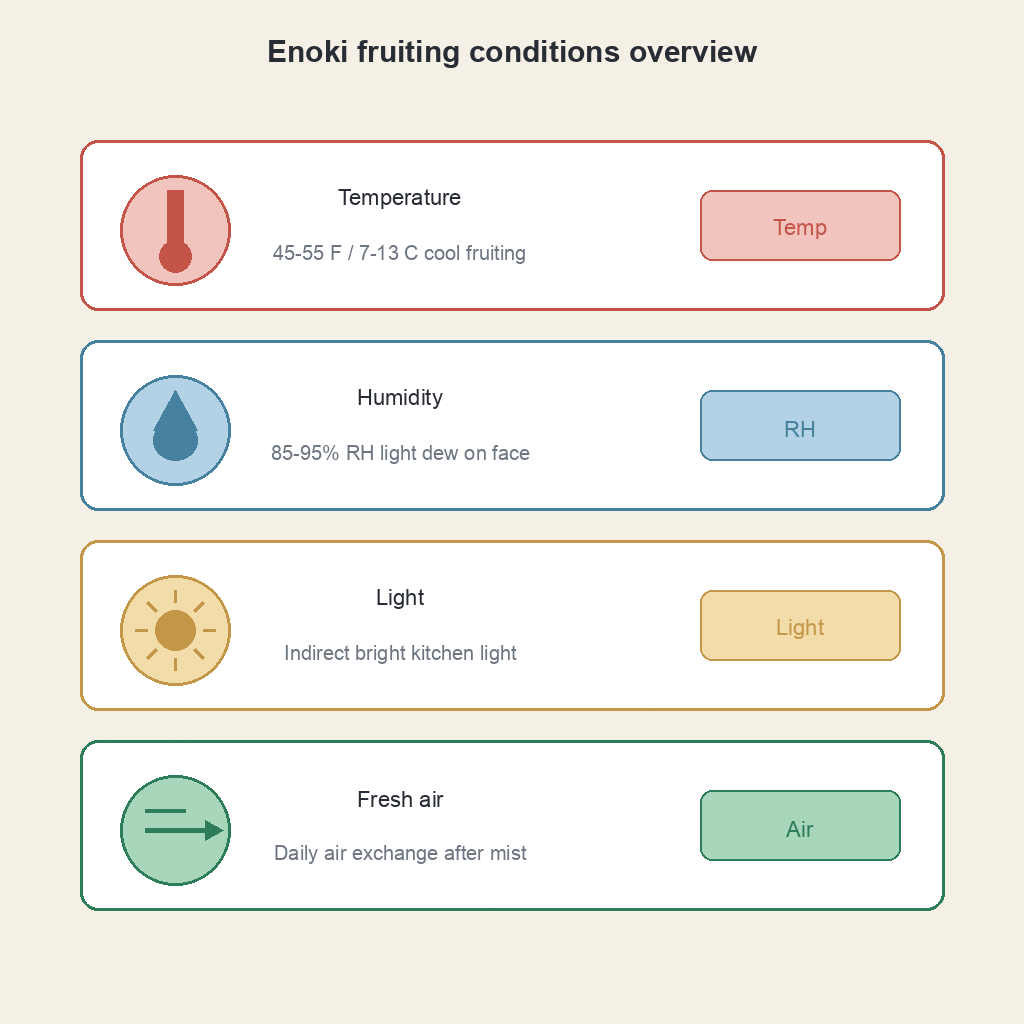
Typical home ranges only — not guarantees. T04 will render the conditions graphic; values stay in prose so you can act now. Don’t chase perfect lab numbers; chase stable kitchen ranges you can hold for a week.
Temperature
Fruiting often prefers cooler than oyster. Plan a cool room target band (~50–60°F / 10–16°C class). Warmer rooms slow quality. Verify with a TempPro TP50 thermometer/hygrometer. A hallway that “feels cool” is not a reading.
If the only cool spot is a garage that freezes or a window that cooks at noon, pick a different shelf. Stable cool beats dramatic cool.
Humidity
High surface humidity at the fruiting face. Fine mist beats drowning. A continuous ultra-fine mister keeps dew without puddles. If pins look waterlogged, you’re not under-humid — you’re over-spraying.
Light
Indirect daylight or room light. Not a dark closet forever if you want normal coloration cues. A bright kitchen corner usually beats a sealed cupboard.
Air
Gentle fresh air. Avoid sealed stagnant tents and direct AC blasts. If the apartment is arid, a tabletop humidity shell can help — still open it daily. Stale wet air invites soft stems and later blotch issues.
Harvest & second flush
When to cut
Stems elongated, caps still relatively small for classic enoki kitchen look. Firm tissue and clean smell beat waiting for “just a bit longer” when stems start to soften.
How to cut
Clean scissors at cluster base. Avoid tearing the block face wildly. Wipe blades between kits if you run more than one gourmet project on the same shelf.
Second flush
Rest, keep lightly humid, resume mist. Expect smaller later flushes. Don’t drown the face to force a second round — dew and patience still win. If the second flush looks soft or off-smelling, harvest what is firm and stop the block.
Kitchen use
Cook thoroughly as you would store enoki — culinary page only. Soups, hot pots, quick sautés. Same-day cooking keeps the crisp stem texture that makes enoki worth growing at home.
Common mistakes
- Handling enoki like a warm oyster counter kit — heat plus dryness means skinny fails or stalls. Cooler placement isn’t optional flavor text.
- Drowning pins with heavy spray — soft stems and bacterial issues (see bacterial blotch). Dew, not puddles.
- Skipping Path A skills — jumping to liquid culture before one successful kit. Gear doesn’t replace misting habits.
- Expecting supermarket identical looks under warm bright conditions — home enoki can differ; judge by firm edible quality for cooking.
- Ignoring contamination cues — grey webs and green patches need problem hubs, not “more mist.” Stop species tweaks when color or webs show up.
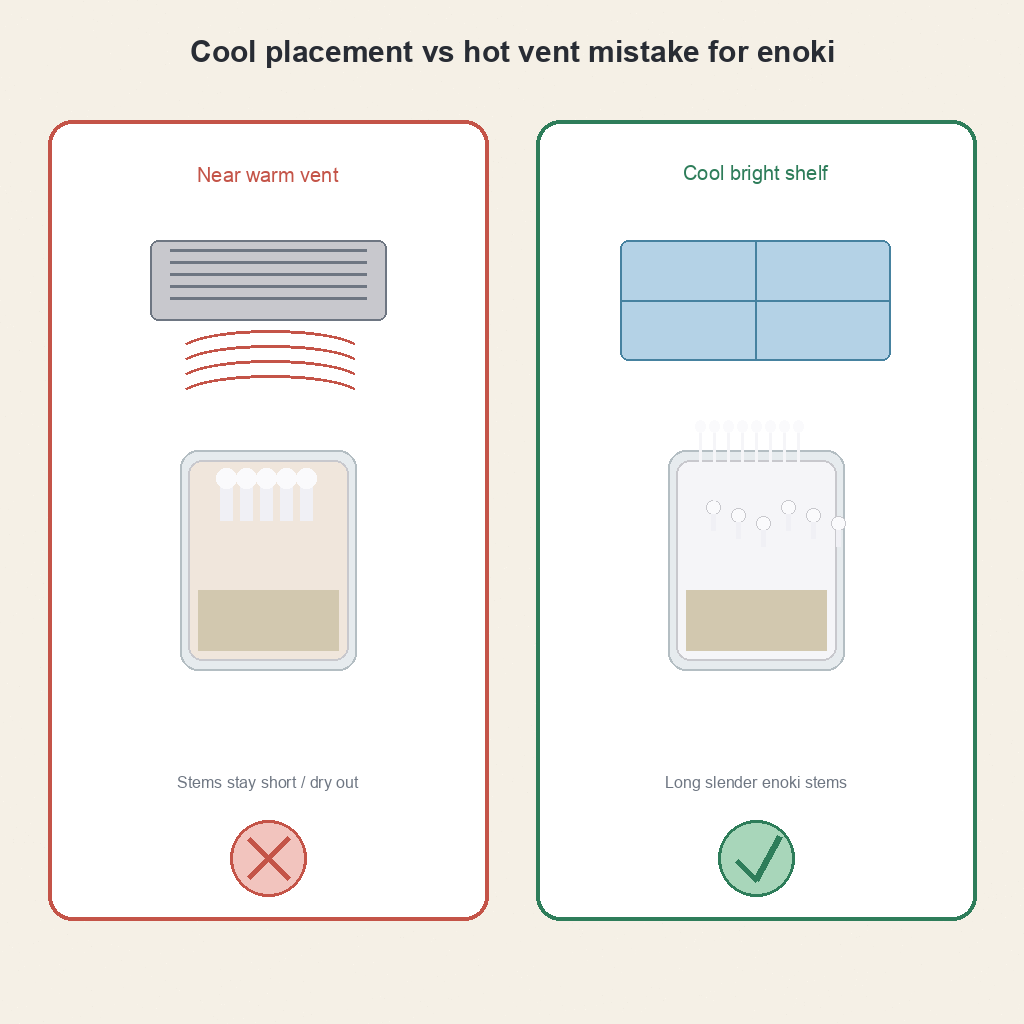
If pins stall with a dry cracked face, leave this hub and open pinning help. Don’t keep adding water on a schedule that already failed.
What you’ll need
Roles only. Buy for the path you’re on this month, not every path at once.
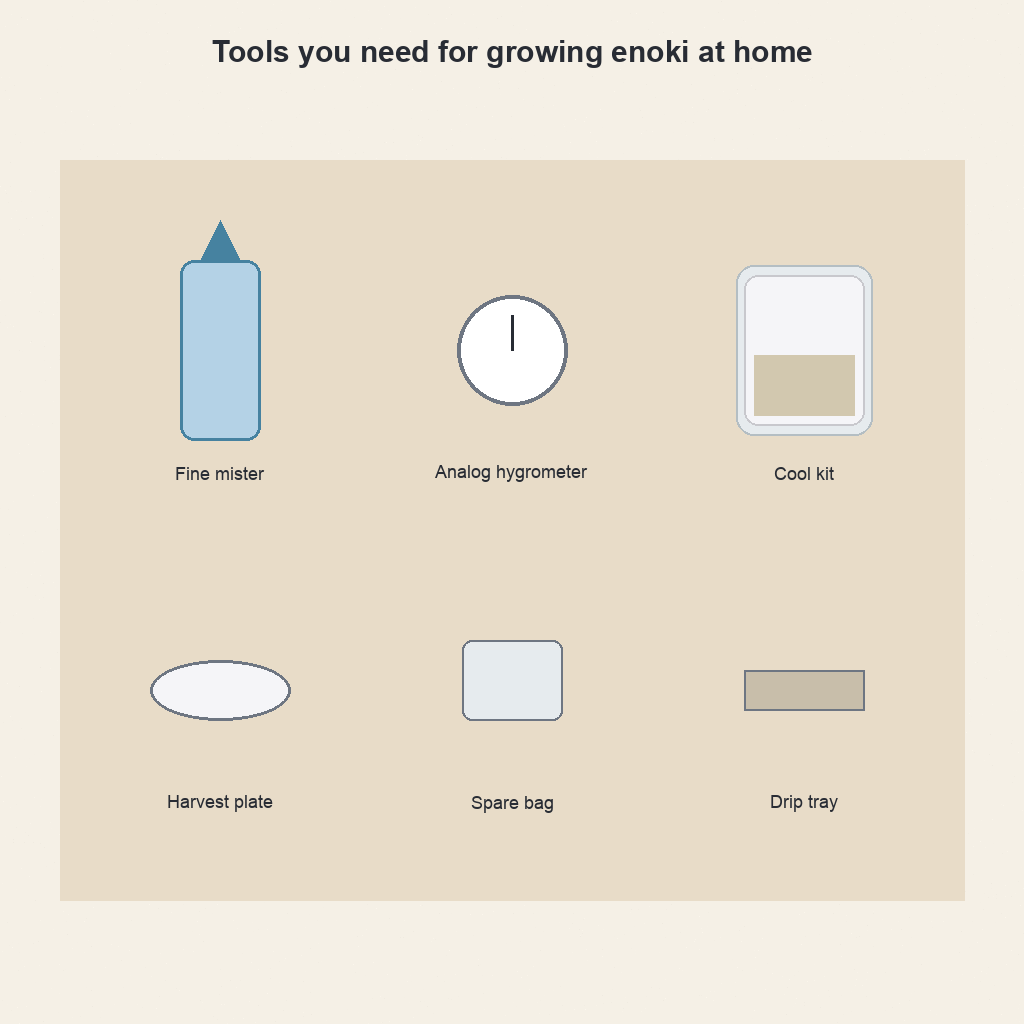
Path A gourmet starter kit
Oyster RTF if enoki kit unavailable — skill bridge: Back to the Roots oyster grow kit. If you already found an enoki RTF kit, use that label’s cut pattern and keep this oyster kit as your backup edible species.
Enoki liquid culture (Path B)
Only after kit success: Liquid Fungi enokitake LC syringe. Culture without misting habits is just expensive practice at making messes.
Fine mister
Daily dew tool: SUPER+ fine mist 2-pack. This is the tool you will use every day on Path A — buy it before culture gear.
Hygrometer / thermometer
Verify cool-room claims with numbers: TempPro TP50. A hallway that “feels cool” is not a reading you can trust for fruiting quality.
Optional humidity shell
Apartment arid-air helper with air exchange: mini indoor greenhouse tent. Open it daily. A sealed wet box is not a cool-room substitute.
Related lion’s mane kit
Alternate cool-leaning gourmet project: North Spore lion’s mane 4 lb kit. See also the related culinary species hub. Only add a second species after one clean harvest, not during a crisis flush.
Related species
- Oyster — default first gourmet when cool fruiting is not ready yet
- Lion’s mane — another culinary species path after kit skills
- Chestnut mushroom — Wave E sister gourmet species with slower kitchen timelines
- Methods: grow kits, grow bags, and fruiting conditions when air and humidity need a reset
Key takeaways
- Enoki is a cool-leaning gourmet edible species — kit-first when you can buy a ready block.
- Path A skills beat Path B gear every time; culture work waits for one clean harvest.
- Humidity plus cool air drive kitchen-quality stems; heat and puddles wreck them.
- Home looks can differ from supermarket sticks — judge firm edible quality for cooking.
- Contamination cues go to the problem cluster, not random additives or more mist.
- Keep a simple log of room feel and mist count so stalls are diagnosable.
- Culinary kitchen growing only on this site.
Give cool placement two honest weeks before you write enoki off as “too fussy.” Most home stalls come from warm vents, sealed wet shells, or Path B gear bought before Path A habits. Photograph the face in daylight, log mist count and room feel, and cook firm clean clusters the same day — soups and hot pots reward kitchen timing more than waiting for supermarket-perfect sticks.
Culinary / edible kitchen growing only. FungiAtHome does not cover psychedelic or actives cultivation.