
You just dried a flush of shiitake or lion’s mane in a 6-10 hour dehydrator cycle and now you’re staring at a pile of cracker-dry slices wondering if they go in a paper bag, a mason jar, or a vacuum pouch on the counter. The short answer: a 32 oz wide-mouth glass jar with an airtight lid plus a 5 g silica gel packet covers most home storage for six-plus months. Below is the container-type decision for short- to long-term kitchen storage of dried gourmet mushrooms.
Quick answer
For a single dried gourmet harvest, a 32 oz wide-mouth glass jar with an airtight lid plus one or two 5 g silica gel packets is enough for months of kitchen storage. Upgrade to vacuum bags with oxygen absorbers only when you want six-plus months of sealed storage or are stacking several harvests together at one time. Skip the oxygen absorbers for jars you open every week, because they exhaust within minutes once exposed to air.
Why dried mushrooms go soft - and what to do about it
The most common soft-dried-mushroom frustration isn’t a drying problem — it’s a storage problem. The dehydrator finished the cycle at 145F for 8 hours and the slices went in cracker-dry. Three days later they’re leathery. The cause is moisture migration back into the slices through the storage container, accelerated by humid kitchen air. The fix is often simpler than people think: a desiccant packet and a sealed jar, not a new dehydrator. The humidity and misting tools page covers the kitchen-RH half of the equation when ambient humidity is the bottleneck.
Moisture migration in and out of slices
Dried slices equilibrate with ambient humidity through their container. A jar that was cracker-dry at the dehydrator pulls moisture from the kitchen over weeks and goes soft. The fix is a desiccant packet or a vacuum seal, not a tighter lid.
Why “cracker dry at the dehydrator” is not “cracker dry in storage”
Storage moisture starts at 10-12% in the slices. Ambient kitchen RH above 60% pulls it back up to 15-18% within weeks without a desiccant. The slices still feel dry when you bag them, but they don’t stay dry.
How ambient kitchen RH moves the goalposts
A dry-climate kitchen (under 50% RH) keeps dried mushrooms stable for months in a plain jar. A humid kitchen (above 65% RH) needs desiccant packets to extend the same window. The container decision is partly a kitchen decision - see the oyster mushroom growing guide for the humidity and pinning context this all sits in.
What a storage container does - and what it doesn’t
A container blocks moisture and oxygen
A sealed container slows the moisture migration and oxidation that turn dried mushrooms soft and stale. Pick a container that closes well and won’t off-gas. Glass and food-grade plastic are the two default choices; both are stable for dried gourmet mushrooms.
A container is not a substitute for proper drying
A jar cannot finish the drying process. Slices that went into the jar leathery will stay leathery inside. Test for cracker-dry before you bag, not after you open the bag a month later. The dehydrator kit guide covers the drying-cycle half of the storage problem.
A container is not a freezer
Freezer storage invites freezer burn and alters texture for dried slices. Room-temperature pantry storage is the default.
Container type decision tree
ROOT: How long do you want to store and how often will you open the container?
- Branch A - eat within 1 month → jar + lid, no desiccant.
- Branch B - 1-3 months, plan to open often → hinged airtight jar + desiccant.
- Branch C - 3-6 months, fewer openings → vacuum bag + desiccant.
- Branch D - 6-12 months, sealed until use → vacuum bag + desiccant + oxygen absorber.
- Branch E - multi-harvest stash → bulk airtight jar + per-portion vacuum mini-bags.
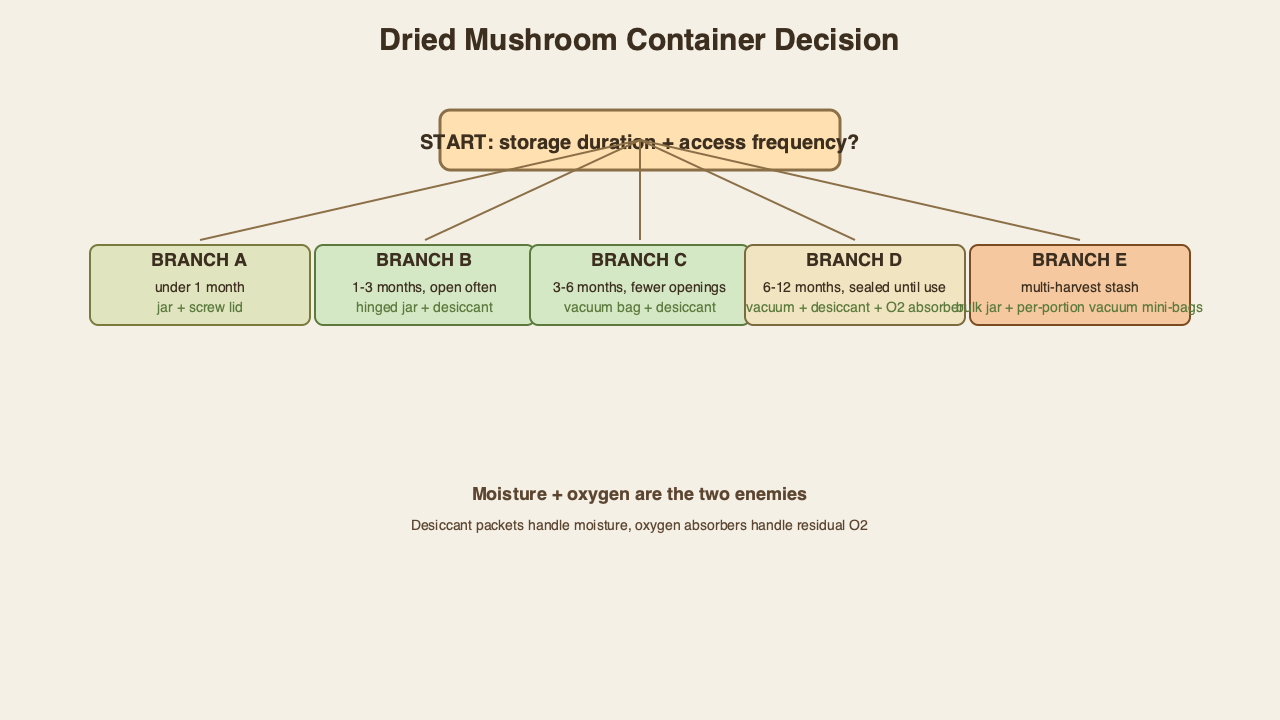
Branch A — Eat within 1 month
Jar + lid. Plain airtight lid, no desiccant needed if the kitchen stays under 60% RH. The ComSaf 32 oz wide-mouth mason jar is the cheapest Branch A container.
Branch B — 1-3 months, plan to open often
Hinged airtight jar + one 5 g silica gel packet. The hinged lid lets you reseal fast. The Encheng 32 oz hinged-lid mason jar plus Vbeijll 5 g silica packets is the Branch B default.
Branch C — 3-6 months, fewer openings
Vacuum bag + one 5 g silica gel packet. Vacuum pulls most of the oxygen out and slows oxidation further. The xinbaolong vacuum sealer rolls work with any chamber sealer.
Branch D — 6-12 months, sealed until use
Vacuum bag + desiccant + oxygen absorber. The oxygen absorber pulls residual O2 down to under 0.1% and is the longest-storage option. Add LinsKind 100cc oxygen absorbers to a vacuum-bagged harvest for Branch D.
Branch E — Multi-harvest stash
Bulk airtight jar holding several harvests, plus per-portion vacuum mini-bags for daily use. The ComSaf jar stores the bulk; xinbaolong rolls portion out a single serving. The spawn-storage methods page covers how to keep the next block’s unused spawn between flushes, and the lions-mane species page covers slice thickness for pom-poms.
Why most “soft dried mushrooms” are storage issues, not drying issues
The most common complaint among new growers is “my dried mushrooms went soft” - and the cause is almost always storage, not drying. The dehydrator may have finished the cycle at 145F and 8 hours, but if the slices went into a jar at room temperature and warm, condensation forms within hours and softens the slices by day five. The fix is the cool-and-dry step before bagging plus a desiccant packet in the jar.
How to know if your storage is the bottleneck
Look at the slices on day three in storage. If they look matte or bend instead of snap, the storage container is the issue. If they are still opaque and crunchy, the dehydrator finish was good and storage is fine. The visual test is faster than a moisture meter for home growers.
Why visible “white fuzz” is sometimes salt and sometimes mold
Salt crystals from residual moisture evaporation look like white fuzz under magnification but wipe away with a dry cloth. Mold has a musty or off-aroma and stays put when wiped. When in doubt, defer to the contamination overview - the jar with visible mold goes in the trash, not back in the pantry.
Size, opening, and material decisions
Wide-mouth vs narrow-mouth for hand-loading slices
Wide-mouth (3-inch opening) fits a hand-loading handful of slices. Narrow-mouth requires a funnel and is more annoying for daily access. For Branch B jars you’ll open weekly, the wide-mouth matters - a narrow-mouth jar that requires a funnel turns a 30-second pour into a 2-minute ritual.
Glass vs food-grade plastic for slice visibility
Glass jars let you see condensation or color change inside without opening. Food-grade plastic is lighter but hides the slice condition.
Why you want a clear container when you are checking moisture
Cracker-dry slices should look opaque and beige. Darkened or translucent slices have absorbed moisture and need re-drying. A clear ComSaf jar is the visibility play.
Desiccant and oxygen absorber math
One 5 g silica packet per 32 oz jar - that is enough
A 5 g silica packet absorbs about 5-10% of its weight in water before saturating. In a 32 oz jar that is enough for 3-6 months at typical kitchen RH. Drop one or two Vbeijll packets into each jar at packing time.
When 100cc oxygen absorbers earn their keep
100cc O2 absorbers drop residual O2 in a sealed vacuum bag to under 0.1% within 24 hours. That level of O2 inhibition extends safe storage to 6-12 months for dense slices like shiitake. Add one LinsKind 100cc packet per vacuum bag.
Why you don’t want oxygen absorbers in jars you open weekly
Once exposed to ambient air, an O2 absorber exhausts its capacity within minutes. Reserve them for sealed-until-use batches in vacuum bags. A jar opened every week doesn’t need an oxygen absorber - the silica gel packet handles the residual moisture without one.
What you’ll need — purchase-mapped
Wide-mouth glass jar (ComSaf)
Standard 32 oz wide-mouth jar fits one or two shiitake harvests by hand. Airtight lid lets you see moisture and reseal between uses. The ComSaf 32 oz wide-mouth mason jar 2-pack is the cheapest entry to glass storage.
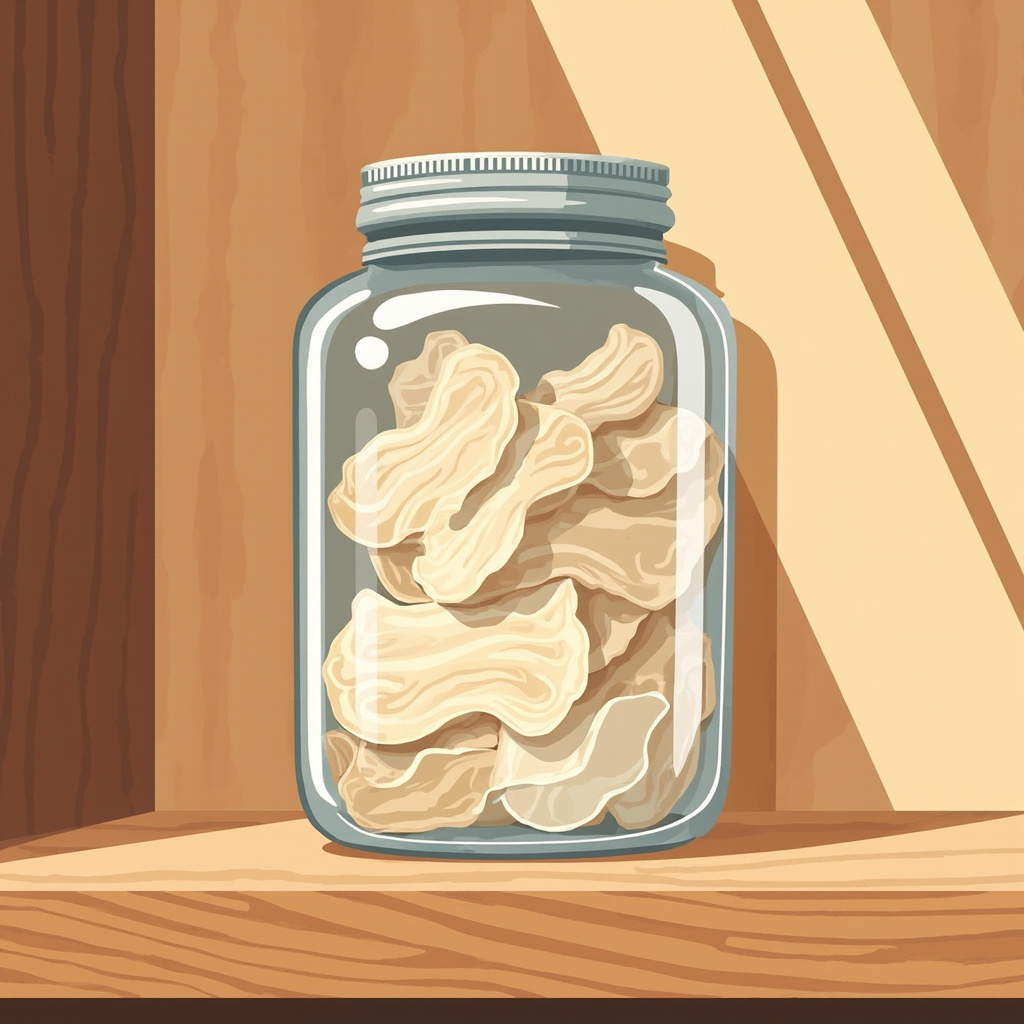
Hinged airtight jar (Encheng)
Hinged airtight lid removes the band-and-flat two-step and lets you crack the seal for a quick sniff test without losing the gasket. The Encheng 32 oz hinged-lid jar is the Branch B default.
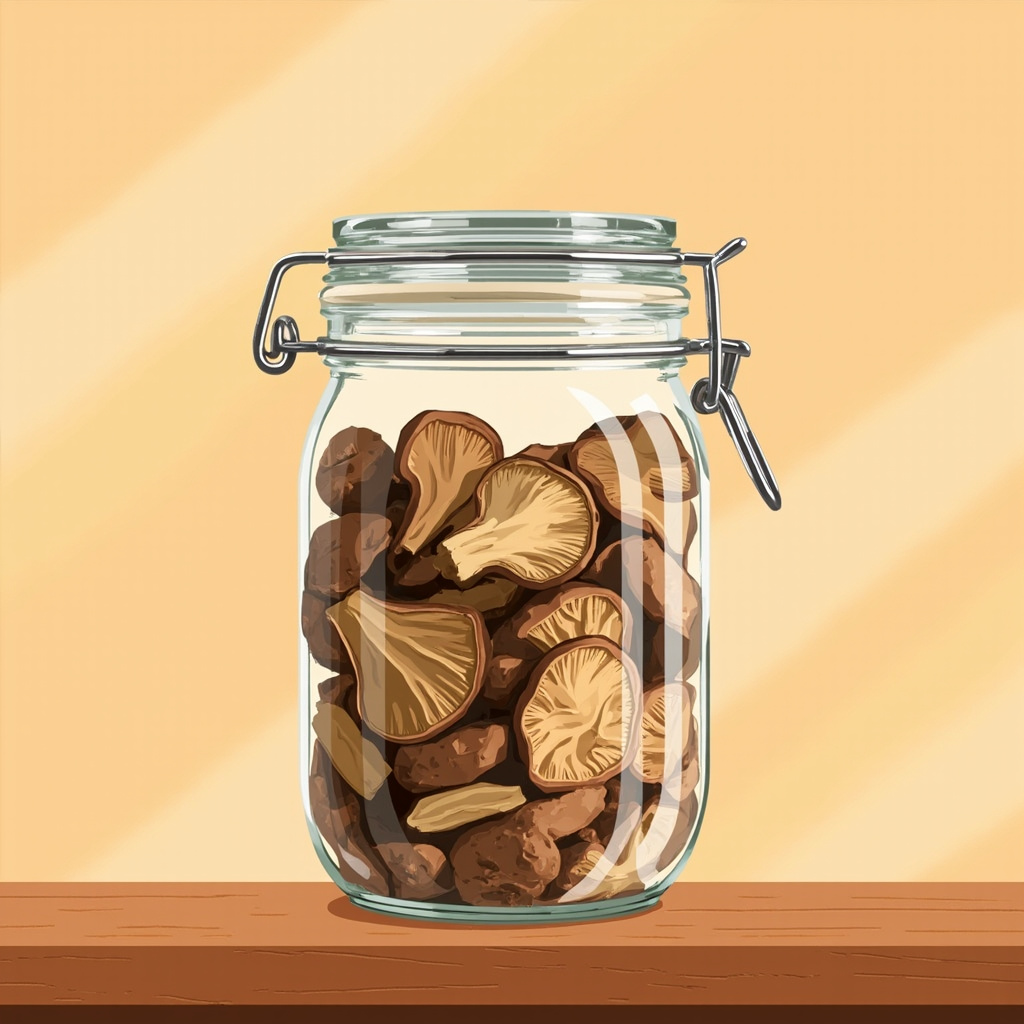
Vacuum sealer rolls (xinbaolong)
Cut-to-length vacuum rolls for one or two small dried harvests when you already own a chamber vacuum sealer; cheaper per bag than pre-cut pouches. The xinbaolong 6-pack vacuum rolls is the only Branch C roll on the list.
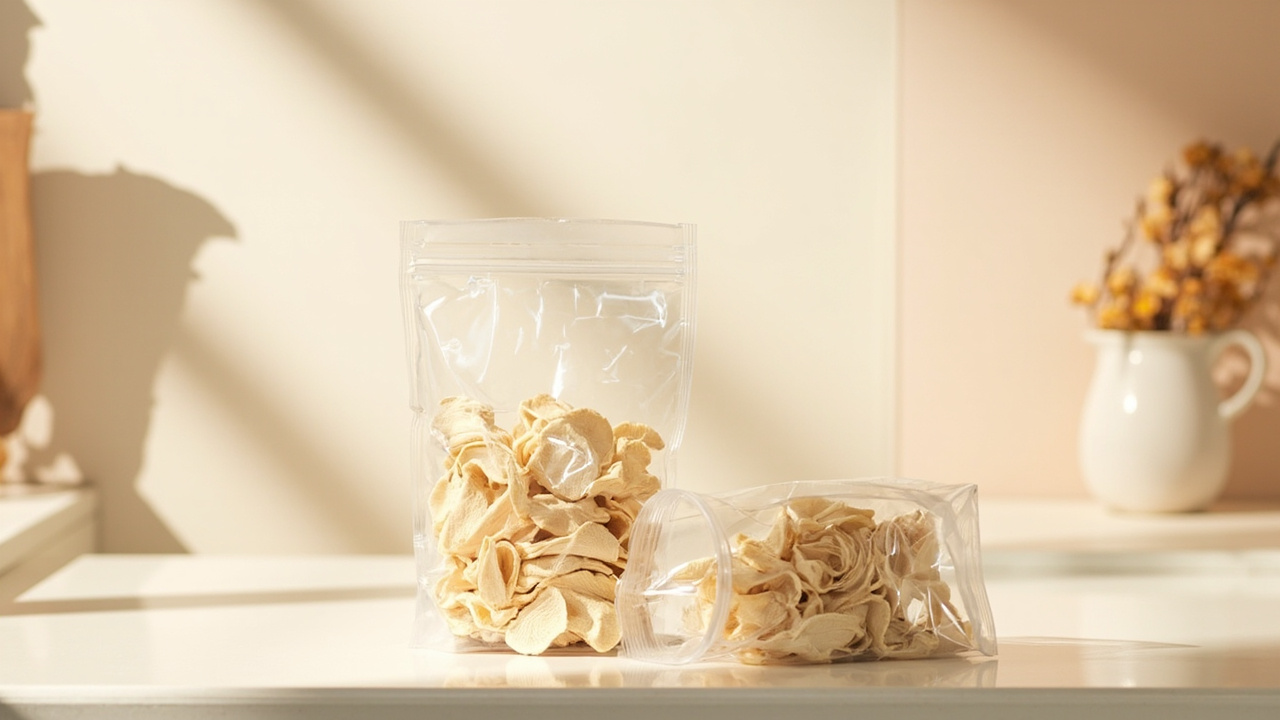
Silica gel packets (Vbeijll)
Drop one or two 5 g packets into a jar or vacuum pouch to absorb residual moisture and stop dried mushrooms from going soft again weeks later. The Vbeijll 5 g silica packets 50-pack is enough for 25-50 jars.
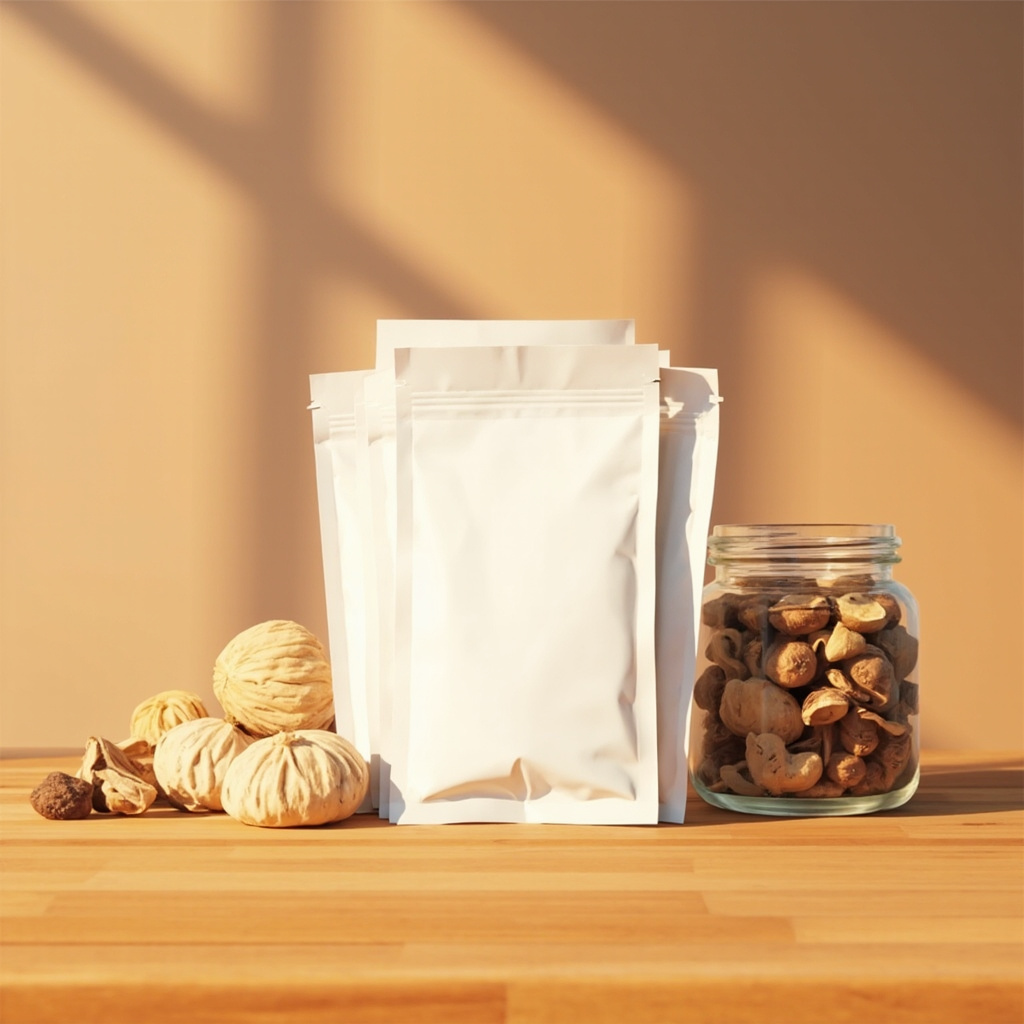
Oxygen absorbers (LinsKind)
Pair one 100cc oxygen absorber with a vacuum-sealed or jarred dried gourmet harvest when you want months-long storage without oxidation off-flavors. The LinsKind 110-pack 100cc oxygen absorbers is the cheapest bulk pack.
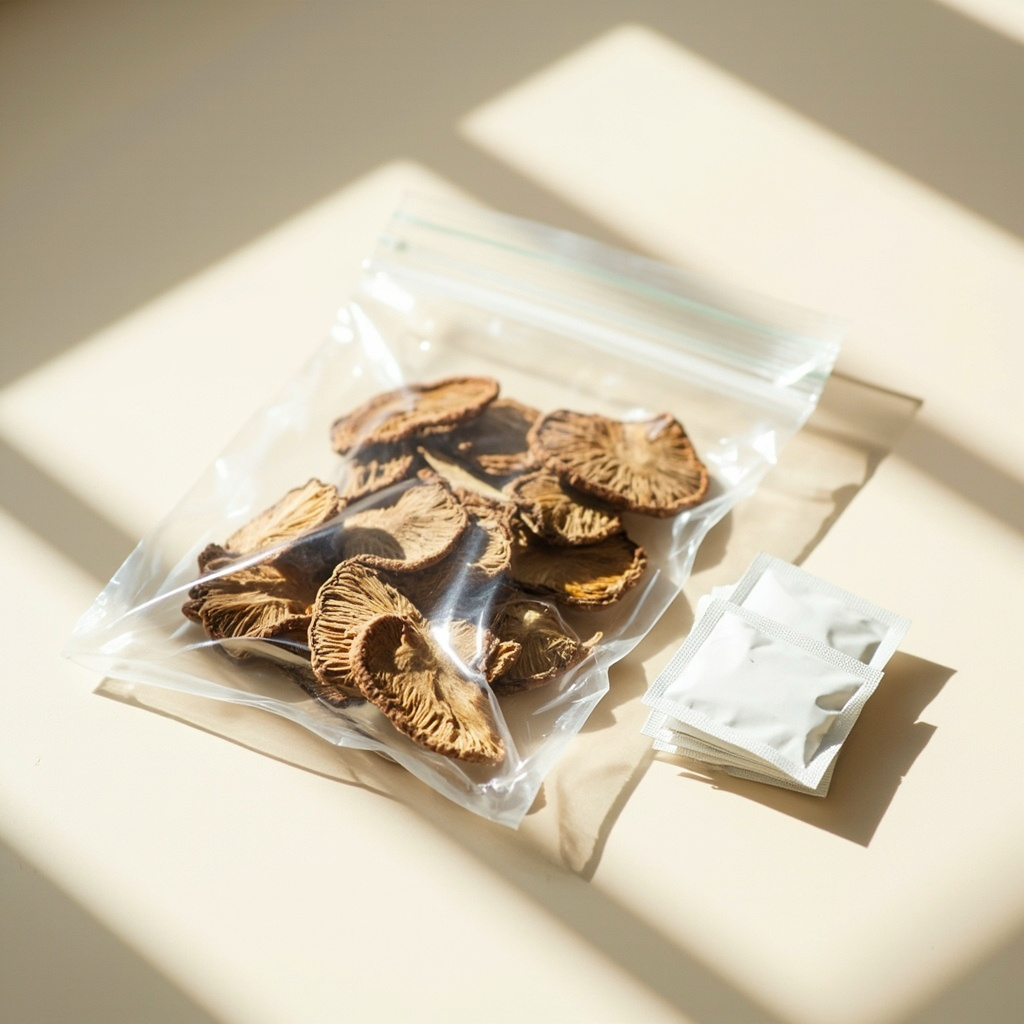
What to do when dried mushrooms soften again
Re-dry on the dehydrator for 30-60 minutes
A short re-dry at 125F returns the slices to cracker-dry without overcooking. Skip if there is visible fuzz or off-aroma.
Replace the desiccant packet
Silica gel recharges in a 250F oven for 2-3 hours, but replacement is cheaper than risking a half-charged packet.
Discard when there is visible fuzz or off-aroma
Visible fuzz or musty off-aroma means contamination. Defer to the contamination overview for assessment.
Common mistakes
- Bagging mushrooms the same hour they come out of the dehydrator - residual heat builds condensation inside the bag. Cool for 30 minutes with the dehydrator door cracked first.
- Reusing a desiccant packet that has been sitting in humid air - once silica absorbs moisture, it stops protecting. Recharge in a 250F oven for 2-3 hours or replace.
- Tossing an oxygen absorber into a jar you will open weekly - oxygen absorbers exhaust on first air exposure and become useless. Reserve them for sealed-until-use batches.
- Using the same vacuum bag for new and old harvests - mixing old and new without re-drying brings moisture into the new batch. Handle each new harvest as a fresh cycle.
- Storing near the stove or in a sunny cabinet - heat cycles the container and re-releases trapped moisture. Pick a cool dark cabinet away from the cooking zone.
Key takeaways
- A 32 oz wide-mouth mason jar with an airtight lid covers Branch A (eat within a month).
- A hinged-lid jar plus silica gel packets covers Branch B (1-3 months, opened often).
- A vacuum sealer roll plus desiccant covers Branch C (3-6 months, fewer openings).
- A vacuum bag with desiccant + oxygen absorber covers Branch D (6-12 months, sealed until use).
- Cool all slices for 30 minutes before sealing in any airtight container.