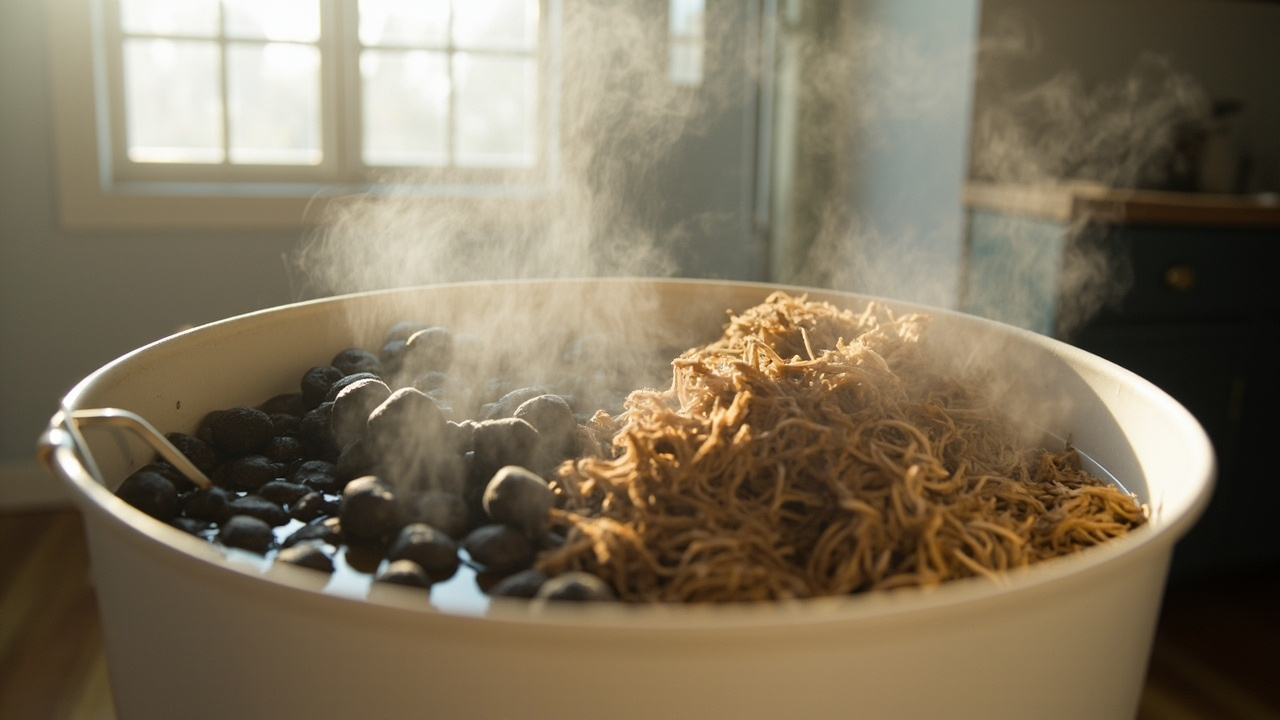
Hardwood pellets are the cleanest DIY bulk substrate for the kitchen grower who wants shiitake or oyster on a real block — no pressure cooker, no lab, just a 5-gallon bucket and a kettle.
Quick answer
Hydrate 100% oak pellets in a 5-gallon bucket with hot water at 160-180°F (1 lb pellets to 0.5 L water, hold 60-90 minutes), check the squeeze test, cool to room temperature, layer with shiitake or oyster grain spawn at 5-10% by wet weight in filter-patch bags, and incubate 14-28 days. No pressure cooker needed for plain pellets.
Who this is for
One clean gourmet kit under your belt, a 5-gallon bucket, a kitchen scale, and a target of shiitake or oyster on a real sawdust block. This guide is the next step after grow bags — for the grower who wants hardwood substrate without investing in a pressure canner.
This guide is explicitly kitchen-scale. If you want to scale beyond 5 bags per cycle, you’ll need a larger workspace and a more controlled pasteurization setup. Most kitchen growers top out at 3-5 bags per cycle, and that’s a fine steady state for years.
What this is / is not
This is a kitchen-scale hardwood pellet substrate prep guide for gourmet edible mushrooms. We focus on 100% oak pellets, hot-water pasteurization, and 1-3 bag batches. This is not a pressure-cooker sterilization guide — for supplemented recipes with grain or bran, you’ll need a pressure canner. This is also not for psilocybin cultivation — we focus on culinary oyster, shiitake, chestnut, and similar species.
What this is
- 100% oak pellets (no softwood, no flavoring, no bark)
- Hot tap water + 5-gallon bucket + thermometer
- Filter-patch bags + shiitake or oyster grain spawn
- A weekend workflow total time 4-6 hours
What this is not
- Supplemented hardwood with grain or bran (requires pressure canner)
- Sterilization in an autoclave
- Bulk substrate for indoor monotubs or grow tents
- A path to cultivation of any non-culinary species
What you need
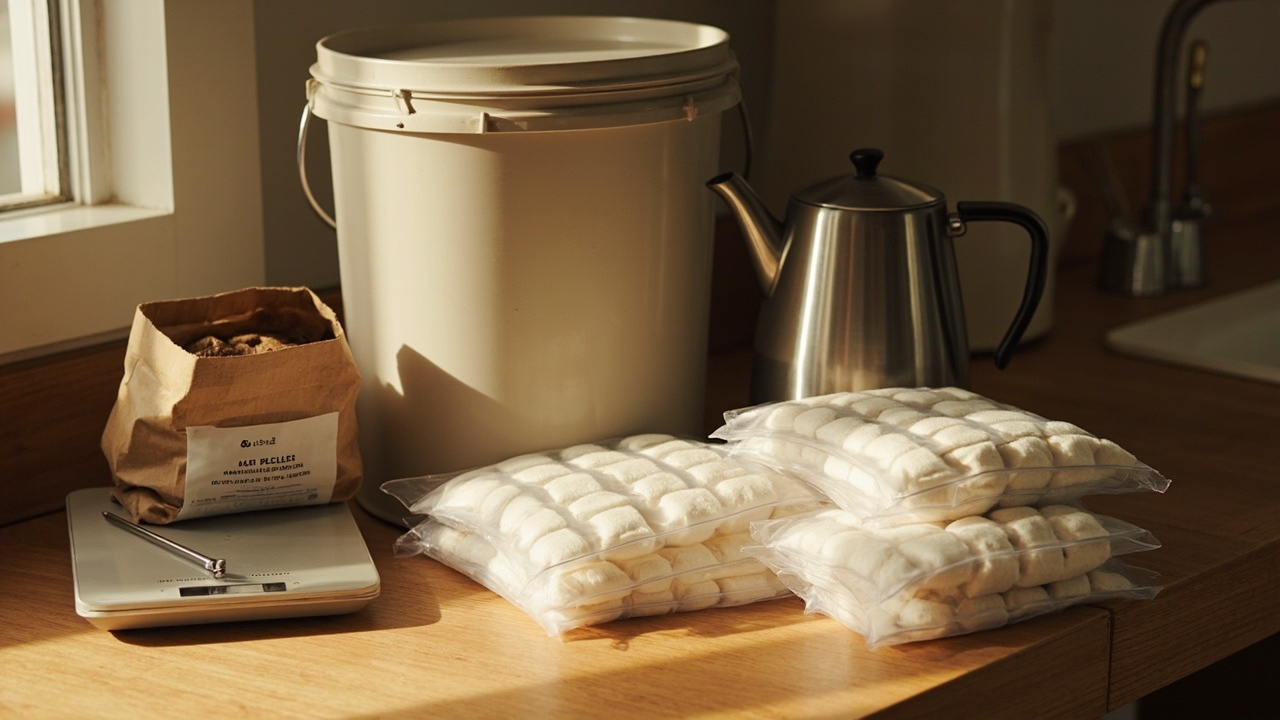
- 10 lb 100% oak pellets (or Master’s Mix with soy hull for lion’s mane)
- 1 lb shiitake grain spawn for the standard 5-10% rate
- 4-6 filter-patch grow bags with T-handle seal
- 5-gallon bucket + kitchen scale + thermometer
Step-by-step
1. Choose your pellets
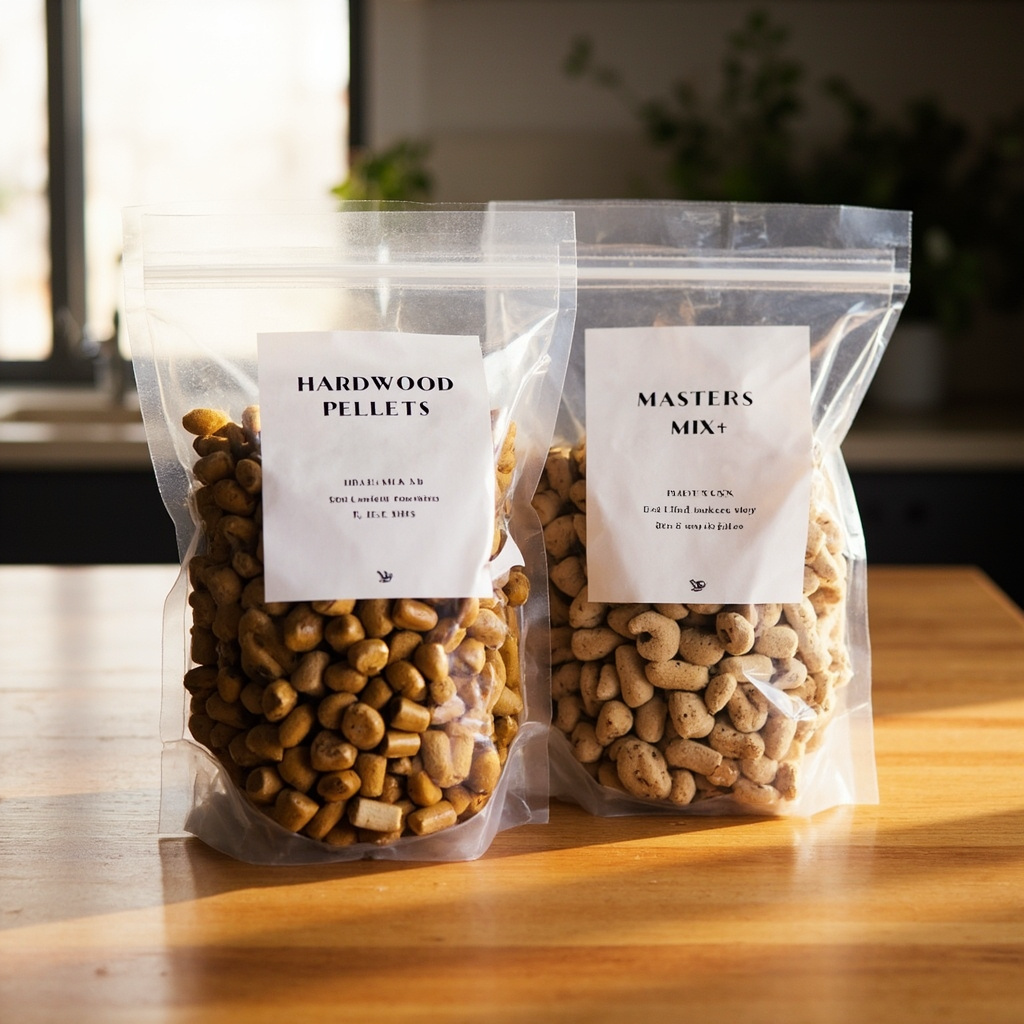
Pick 100% oak pellets with no bark, no softwood, no flavoring, and no additives. Mushroom-grade pellets from specialty suppliers are the safest bet. BBQ pellets from hardware stores work too — pick a brand labeled “100% oak” or “100% maple” and avoid anything with “hickory smoke” or “mesquite” flavoring.
The single most common mistake is grabbing a bag of “competition blend” BBQ pellets that includes softwood or flavoring. Read the bag label carefully. If it says “hardwood and softwood” or lists any flavoring, skip it.
2. Hydrate
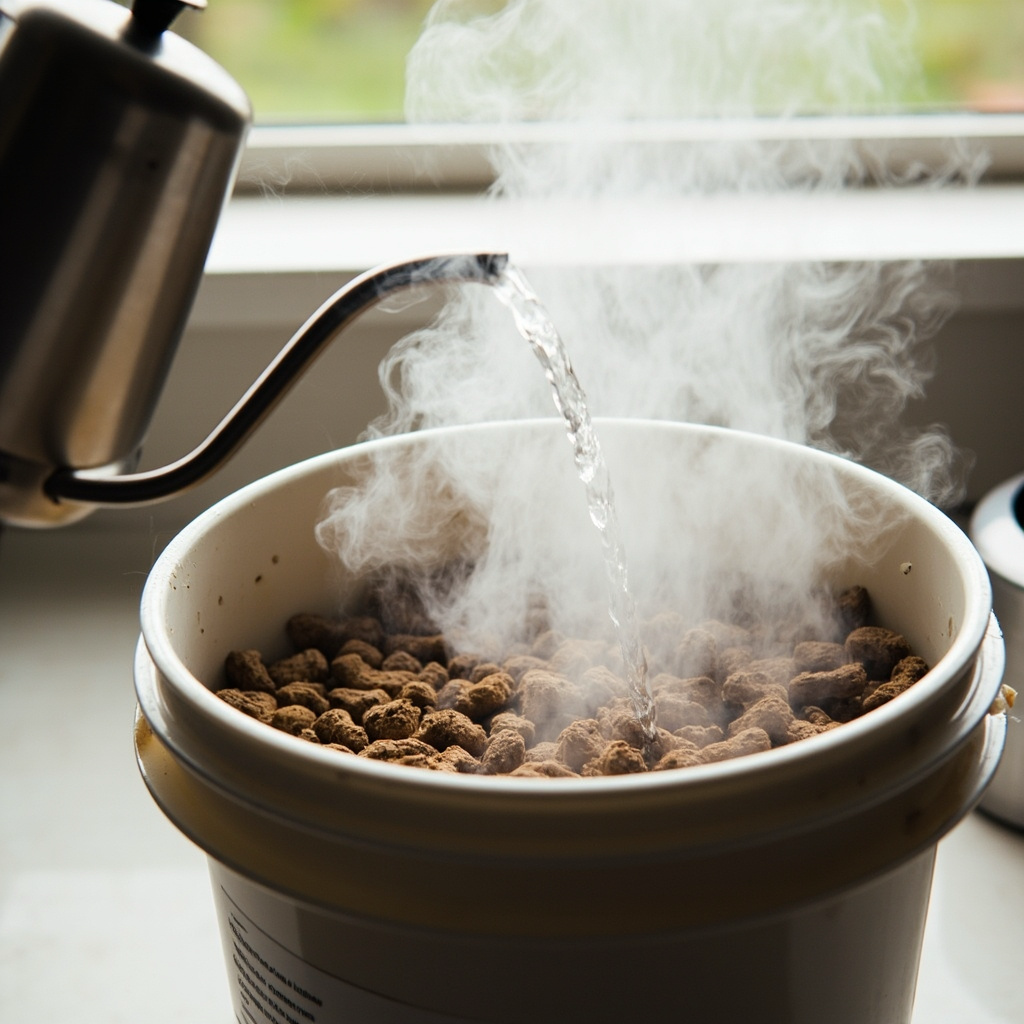
Dump the pellets into a 5-gallon bucket and pour hot water over them. The standard ratio is 1 lb of dry pellets to 0.5 L (about 2 cups) of water. A 10 lb bag of pellets needs about 5 L of water total. The pellets expand to roughly 2x their dry volume, so a 5-gallon bucket is the right size for a 10 lb bag.
Use water at 160-180°F. Boiling water is overkill and drives off volatiles. Tap water at 160°F is fine — let the kettle cool for 5 minutes after boiling before pouring.
3. Check moisture
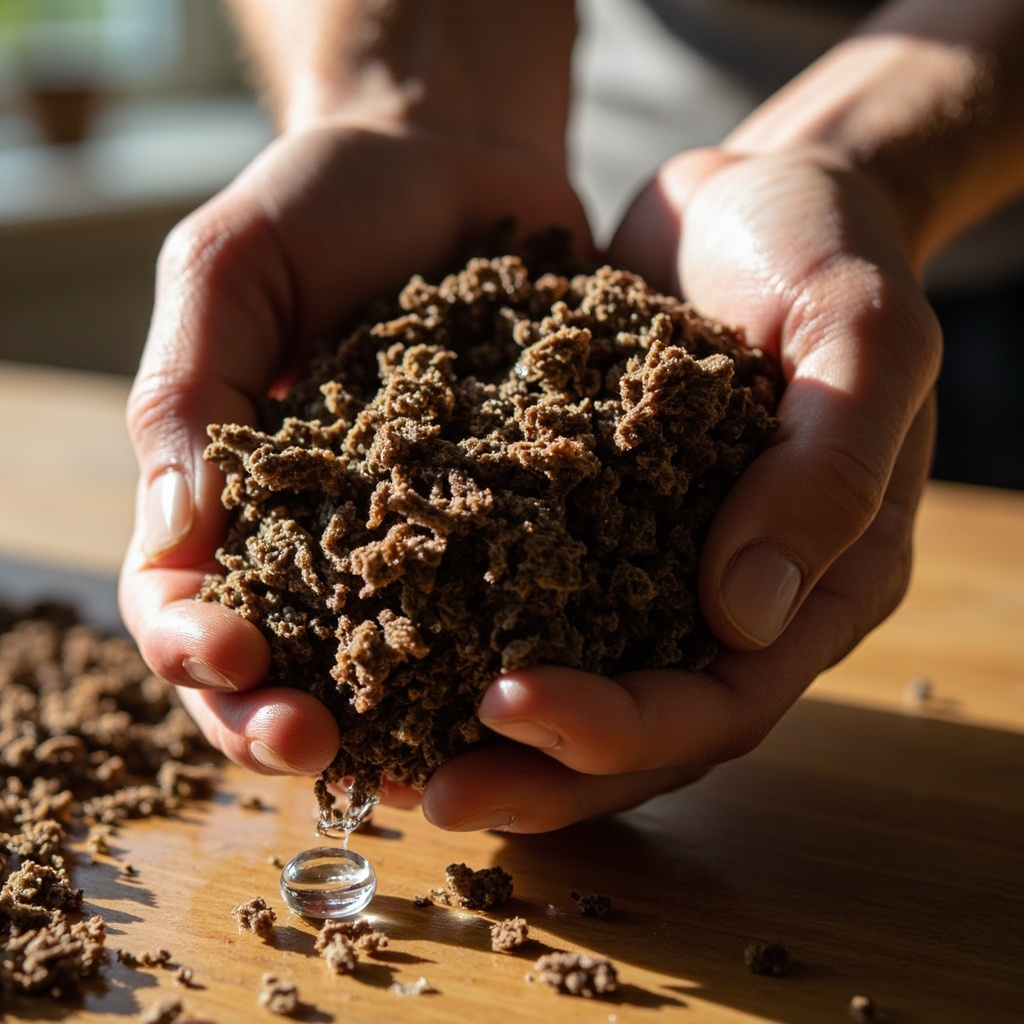
After 60-90 minutes of soaking, the pellets should be fully expanded and crumbly. Pull a handful and squeeze hard. You should see only a few drops of water emerge. If water streams out, drain more. The substrate should feel damp like a wrung-out sponge, not soaked.
If the substrate is too dry, sprinkle in a little more hot water and wait 10 minutes. If it’s too wet, spread it on a clean surface and let it air-dry for 15-20 minutes before re-checking.
4. Cool and layer
Cool the substrate to room temperature (below 80°F) before spawning. Hot substrate kills mycelium on contact. Test with a clean hand — if it’s still warm enough to be uncomfortable, wait.
Stand a filter-patch bag upright in a clean space. Add a fistful of substrate, then a small handful of shiitake grain spawn, alternating until the bag is 3-5 lb full. The 5-10% spawn rate is 0.1-0.2 lb of spawn per lb of wet substrate — so a 4 lb substrate bag needs 0.4-0.8 lb of spawn. A kitchen scale is the only reliable way to hit this rate.
5. Seal and incubate
Use the T-handle on the filter-patch bag to seal the top. Place the bag in a still, dark spot at room temperature — a closet, a basement corner, an under-bed storage area. Don’t open the bag for 14-28 days. White mycelium will creep through the pellets from the spawn chunks.
Shiitake is slower than oyster — expect 14-28 days for full colonization. Oyster usually finishes in 10-18 days. If you see green or black spots, isolate the bag immediately and check the contamination guide.
6. Fruit
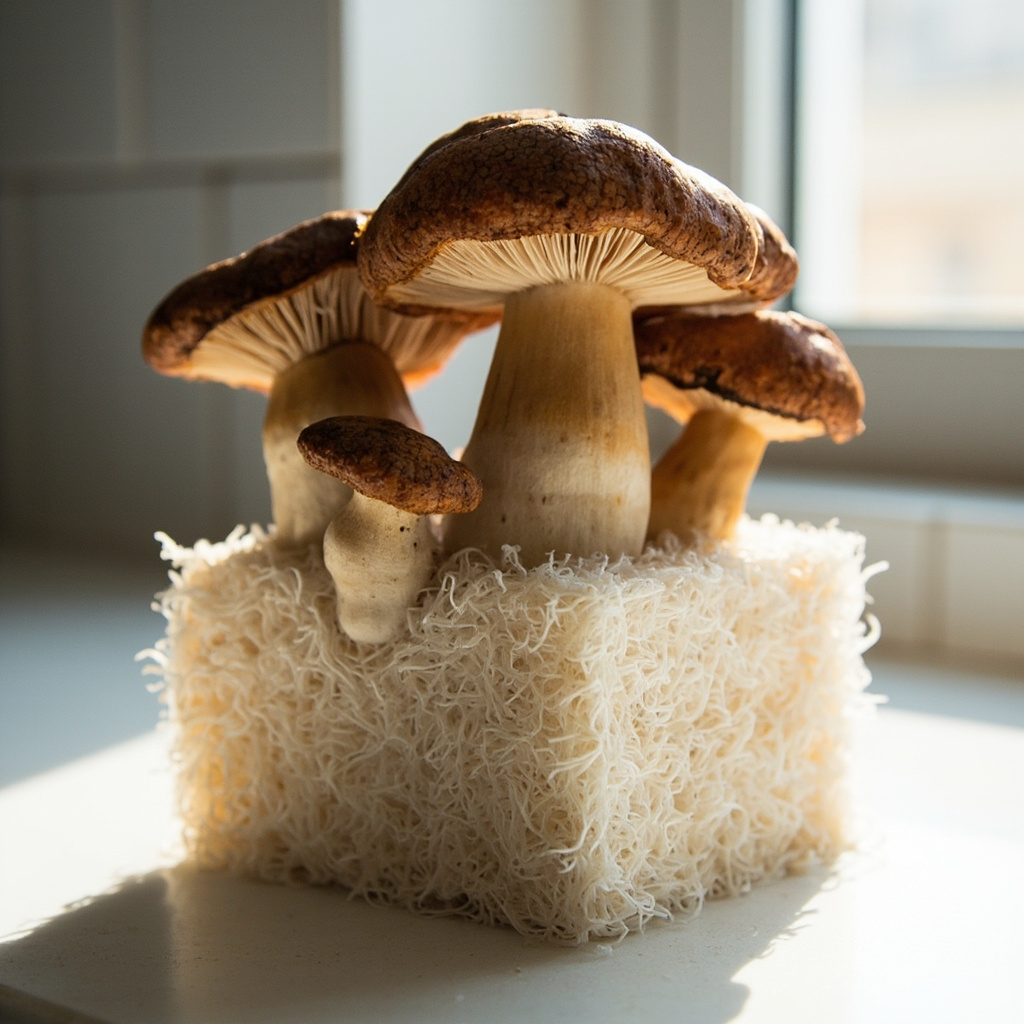
When the bag is fully white and firm, move it to fruiting conditions — indirect light, 70-85% humidity, gentle fresh air. Cut a small X on the face and mist twice daily.
Shiitake: Cold-shock the block in the refrigerator for 12-24 hours before fruiting. The cold triggers pinning. After the cold-shock, return to fruiting conditions and expect pins in 5-10 days. The T-handle seal on the filter-patch bag makes it easy to remove the block for the cold-shock and replace it cleanly.
Oyster: No cold-shock needed. Move directly to fruiting conditions and expect pins in 1-2 weeks.
Minimum kitchen conditions
Hardwood pellet blocks need the same fruiting conditions as a kit: indirect daylight, 70-85% humidity at the cut face, and gentle fresh-air exchange. Most kitchens need either a humidity tent or a twice-daily misting routine to keep the cut face dewy. A small USB fan pointed at the cut face works well — it keeps air moving without drying the surface.
If your kitchen is very dry in winter, plan to mist 3-4 times a day for the first 2-3 weeks. The 5-10% spawn rate you used when filling the bag will only beat contamination if you keep the surface conditions right.
Species compatibility
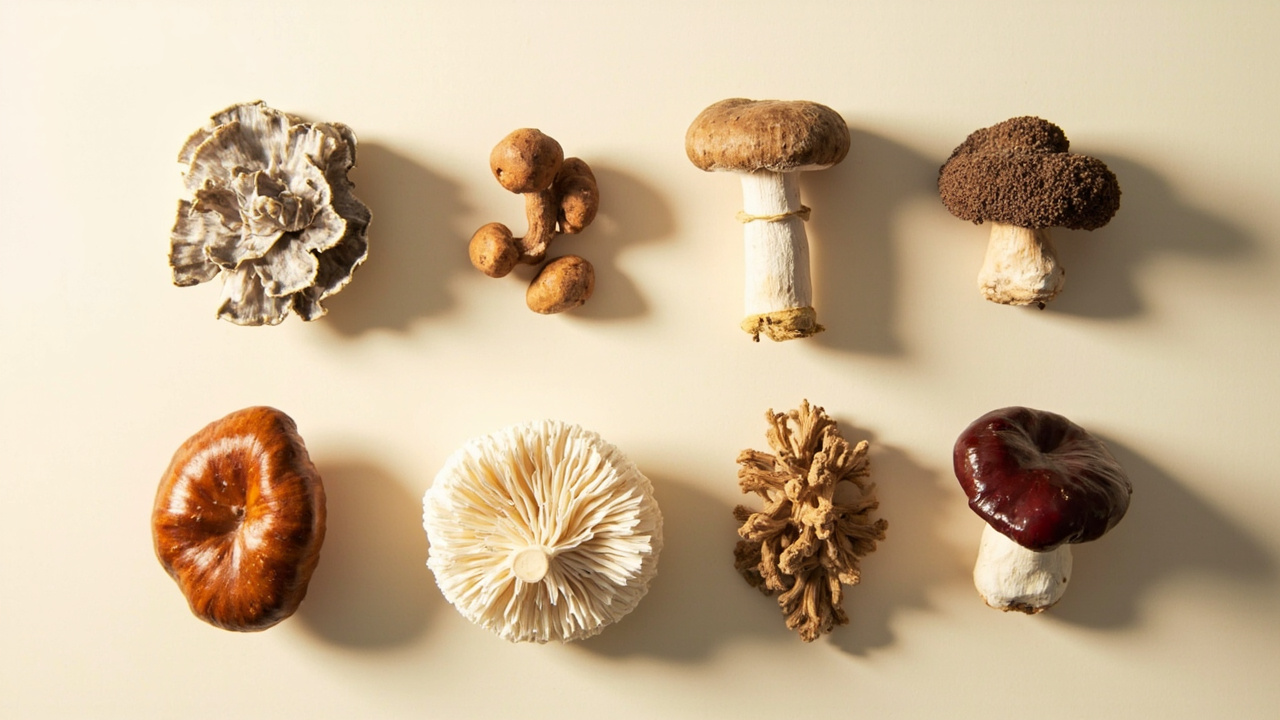
| Species | Compatibility |
|---|---|
| Oyster | YES — clean colonization on 100% oak |
| Shiitake | YES — the species hardwood pellets were made for |
| Chestnut | YES — fruits well on 100% oak |
| King oyster | YES — workable but slower than blue oyster |
| Lion’s mane | NEEDS SUPPLEMENT — plain oak is too low in nitrogen; use Master’s Mix with soy hull |
| Reishi | YES — slower but reliable |
| Maitake | YES — but prefers a supplemented block |
| Wine cap | NO — outdoor wood-chip bed species, not a pellet substrate |
Contamination watch
A clean hydrated oak bag smells faintly sweet and woody. A contaminated bag smells sour, alcoholic, or rotten. If the bag turns bright green, develops black spots, or develops any odor that isn’t clean wood, isolate it from other bags and check the contamination overview before you open it.
Trichoderma (green mold) is the most common hardwood pellet contaminant. It usually appears 7-14 days after spawning if the spawn rate was too low, the pellets were too wet, or the bag was opened mid-colonization. Don’t open the bag to “check” — once Trichoderma is established, opening the bag only spreads it. Isolate and discard.
Wet pockets inside the bag are the early warning sign. A bag that was hydrated correctly has even moisture throughout. If you can feel a soggy clump in one corner while the rest is field-moist, that’s a wet pocket — anaerobic bacteria will take hold there.
Common mistakes
Mistake 1 — Softwood or flavoring
The single fastest way to lose a hardwood pellet bag is to spawn it on softwood or flavored pellets. Softwood (pine, spruce, cedar) contains resins that inhibit mycelium. Flavoring additives (hickory smoke, mesquite) are designed to repel mold and they repel mycelium just as well. Read the bag label. If it says “hardwood blend” or lists any flavoring, skip it.
Mistake 2 — Over-hydration
Pellets that have absorbed too much water develop anaerobic pockets inside the bag. Wet pockets are where contamination establishes first. The squeeze test is the only reliable check: a hard squeeze should release only a few drops of water, not a stream. If water streams, drain more.
Mistake 3 — LM on plain oak
Lion’s mane is a hungry species that wants more nitrogen than plain oak pellets provide. Plain LM on plain oak colonizes slowly and yields small fruitings. Use Master’s Mix with soy hull for lion’s mane — the 50/50 hardwood and soy hull blend has the extra nitrogen LM needs.
Mistake 4 — Skipping the cool-down
Hot substrate kills mycelium on contact. Cool the hydrated pellets to room temperature (below 80°F) before spawning. Test with a clean hand. If you can hold your hand in the substrate comfortably, it’s cool enough.
Mistake 5 — Skipping the cold-shock for shiitake
Shiitake is the one species that needs a cold-shock to fruit reliably. Skip the cold-shock and the block may colonize perfectly and never pin. Twelve to 24 hours in the refrigerator at 35-40°F is the standard cold-shock. After the cold-shock, return to fruiting conditions and expect pins in 5-10 days.
Related species and essentials
- Shiitake — the canonical hardwood pellet species
- Oyster — fast first try on pellets
- Straw substrate — the sister substrate for oyster
- Grow bags — the smaller-scale first step
- How to choose a grow kit — kit decision context
- Sterilization pressure cookers — when you’re ready to scale
Key takeaways
- 100% hardwood only — no softwood, no flavoring, no bark
- 1 lb pellets to 0.5 L water at 160-180°F
- 5-10% spawn rate by wet weight
- Cool to room temperature before spawning
- Shiitake needs 12-24h cold-shock before fruiting
When to compost
A hardwood pellet block is done fruiting when the second flush drops below 30% of the first flush weight, the block feels light relative to its hydrated weight, or the mycelium stops responding to rehydration. Most hardwood pellet blocks give one strong flush and one or two smaller follow-ups, then they’re spent. Don’t try to push a third flush from a finished block — the contamination risk rises sharply as the mycelium weakens.
Compost the spent block in a garden bed or under shrubs. The remaining mycelium helps the soil microbiome and the decomposed oak adds carbon back to the soil. If you have a wine cap bed in the backyard, spent hardwood is excellent top-dressing for it. A handful of shiitake grain spawn mixed into the spent block before you bury it can even seed a small outdoor patch in the right conditions.
Culinary / edible kitchen growing only. FungiAtHome does not cover psychedelic or actives cultivation.