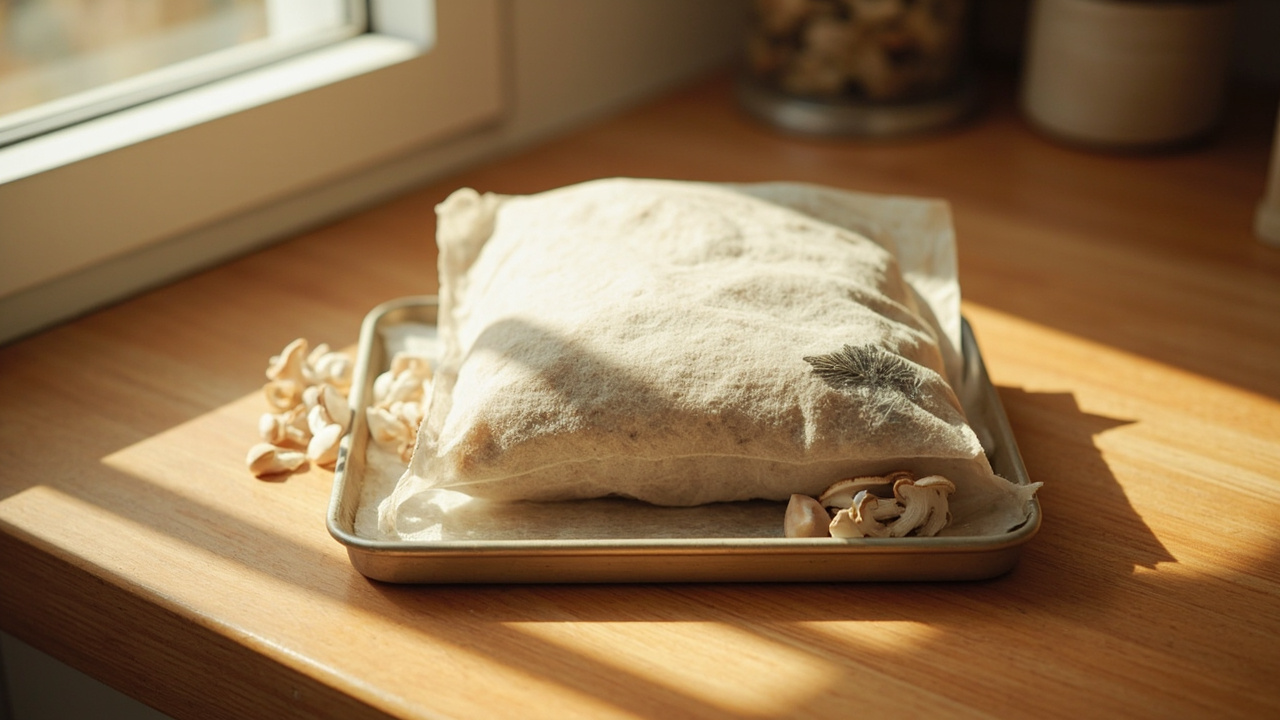
Grey cotton racing across a gourmet oyster kit overnight is the classic panic. Don’t scrape it into kitchen air. Stop the spray, isolate the block, then decide keep, isolate, or discard.
Quick answer
Cobweb mold on a gourmet oyster or lion’s mane kit looks like thin grey cotton webbing that spreads overnight across pins or the cut face — not dense white mycelium. Stop misting into the web, isolate the block from other kitchen kits, and run keep/isolate/discard before scraping. Early thin films sometimes stall with dry air and light peroxide on the surface only; established webs mean discard and restart with a fresh edible kit.
What this is / is not
What cobweb mold is on kitchen kits
Thin, grey-to-light smoky webbing can race across pins or a cut face overnight on gourmet oyster, lion’s mane, or shiitake blocks. The texture is soft and cotton-candy-like; it often collapses when lightly misted. That field cue is useful, not a lab diagnosis. Cobweb shows up when humidity is high, airflow is stagnant, and the block is tired or over-misted.
What this is not
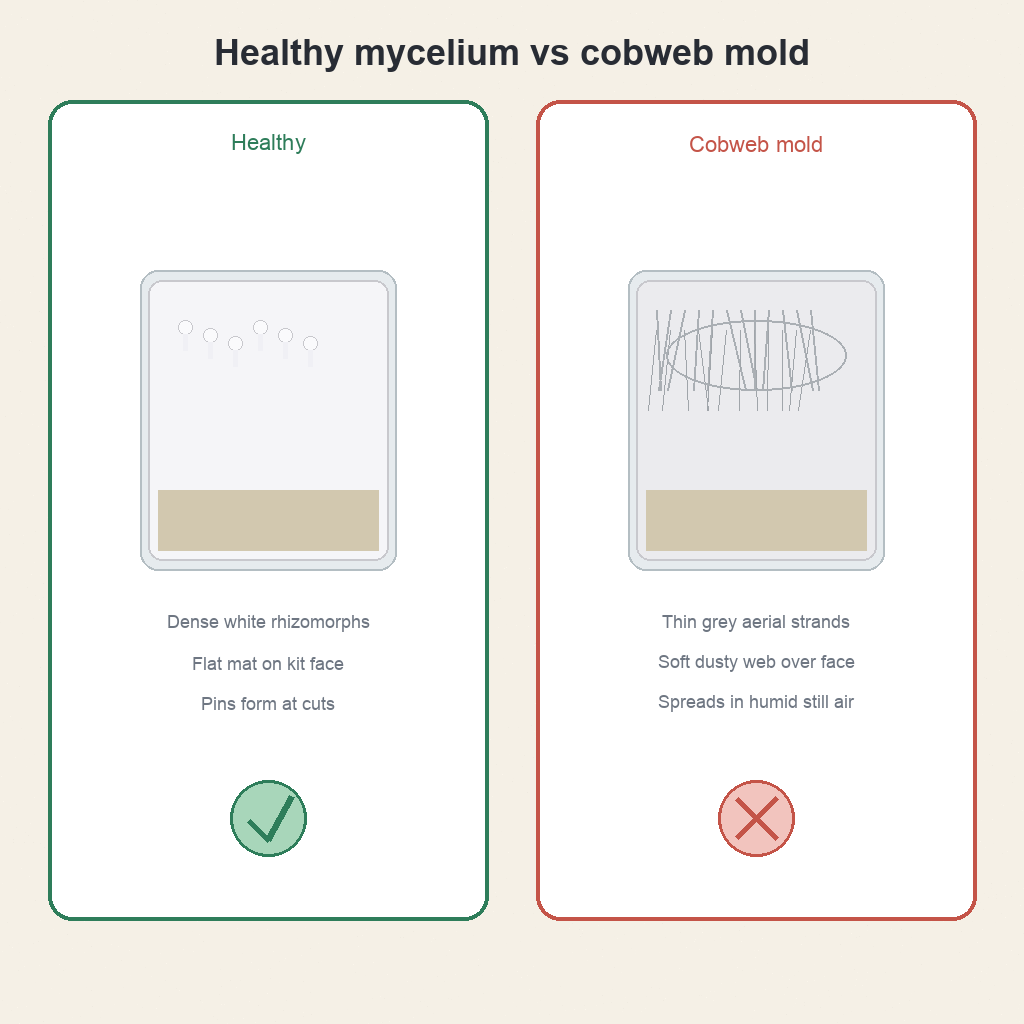
This is not healthy dense white mycelium. Mycelium is tighter, ropey or even, and does not throw aerial grey webs overnight. It is not Trichoderma green mold — if the patch turns green, leave this page and open if the patch turns green. It is not dry bruising, blue-green handling marks on some oyster varieties, or packing foam fibers. And it is not a clinic page or actives grow guide. FungiAtHome covers gourmet edible kitchen kits only.
What it looks like vs lookalikes
Grey web vs healthy mycelium
Cobweb sits airy and sparse above the surface, spreads fast, and may smell musty. Healthy mycelium hugs the substrate, stays brighter white, and fills in slowly after a cut. Side-by-side in daylight is more honest than a single phone flash photo.
Cobweb vs Trichoderma
Trichoderma shows distinct green (sometimes yellow-green) powdery patches and needs a different decision path. Cobweb stays grey or white first. If color flips green, reclassify and follow the green mold hub instead of staying on this page.
Cobweb vs bruising / water beads
Bruising is color inside the tissue, not a floating web. Condensation beads are clear water, not filaments. When you’re juggling several suspect signs, start with the contamination overview framework before you throw a kit.
Why it happens (kit language)
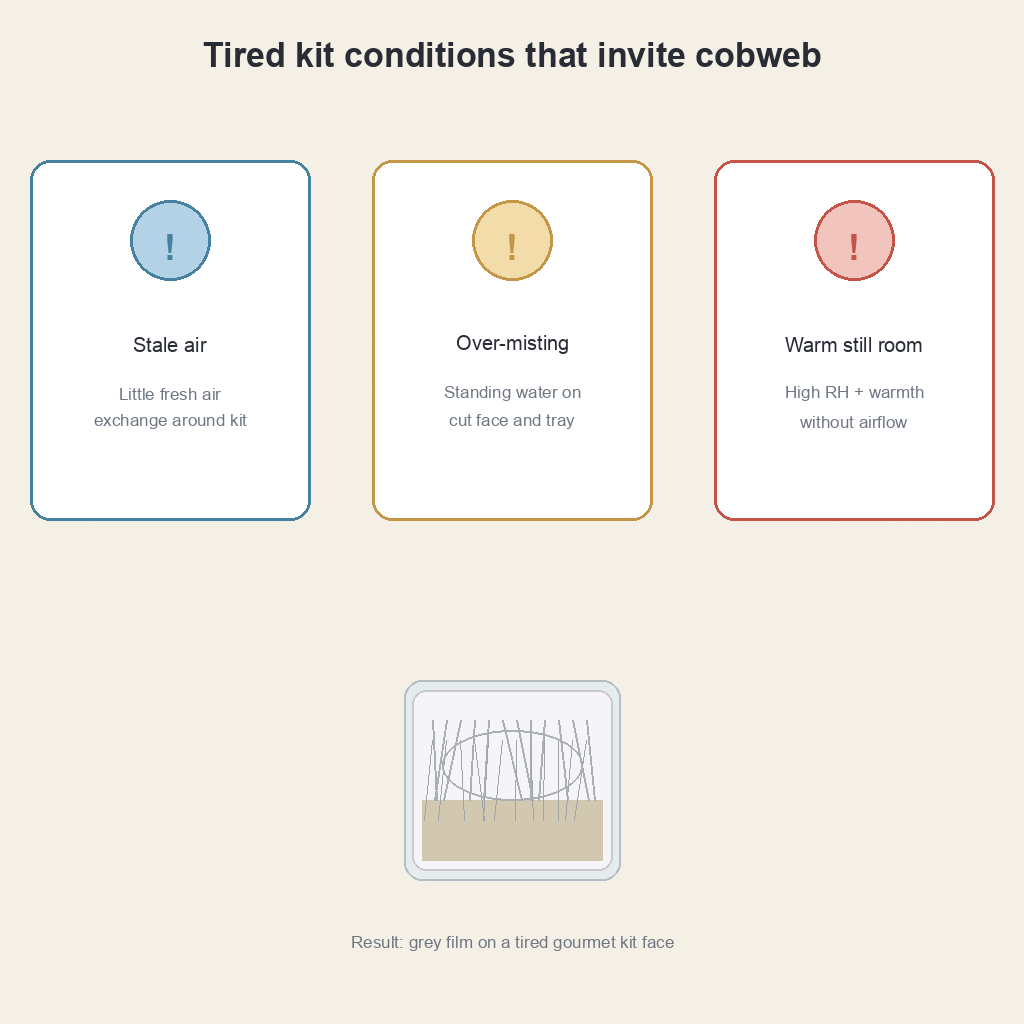
Cobweb isn’t random bad luck on every gourmet kit. It shows up when a few kitchen conditions stack: stagnant wet air, free water on a cut face, a tired block, and tools that hop from one project to the next. You don’t need a lab to lower the odds — you need calmer air and cleaner habits.
Stagnant humid air after opening
Sealed humidity tents with zero fresh air invite aerial molds on gourmet kits. Still, wet air after you open a bag is a common setup for cobweb. If the tent never breathes, the film above the face stays still long enough for grey strands to race. Brief daily air exchange is boring and it works better than heroic sprays.
We’ve watched the same pattern in small apartments: a kit that looked fine at night throws a thin grey veil by morning when the bathroom stays closed and steamy. That’s not a species failure. That’s air that never moved.
Over-misting into pins
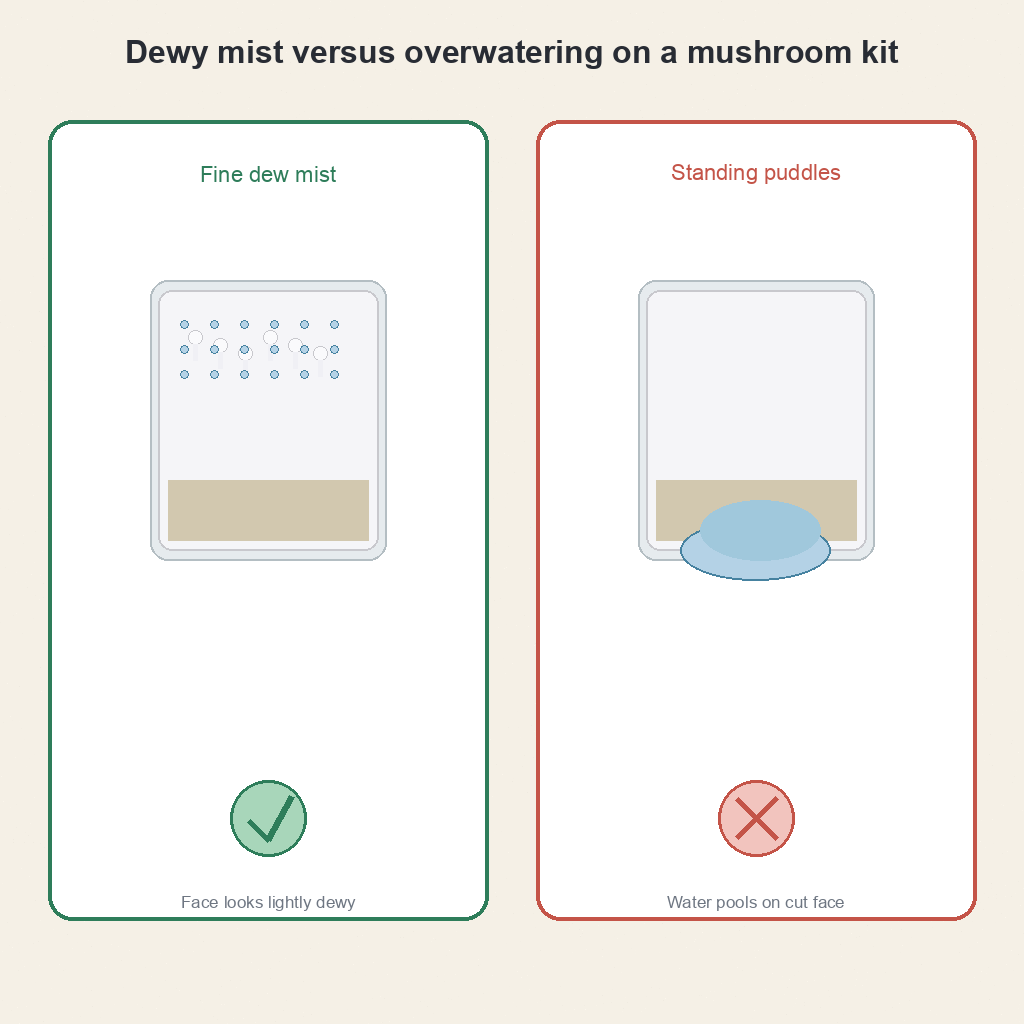
Flooding the cut face creates a wet film cobweb loves. A dewy face is the goal; puddles are not. If water beads sit for hours, you’re not “being thorough” — you’re building a runway. Skip a mist when the face is still glossy from the last pass.
Tired or stalled blocks
Old kits past prime, cold-stored too long, or stalled pins carry higher risk. Compare what you see against healthy oyster kit expectations so you don’t call normal late mycelium a web. A block that’s been open for weeks with no harvest plan is a different animal than a fresh cut made yesterday.
Cross-contamination from tools or neighboring kits
Shared misters, dirty scissors, and parking a sick block next to a clean one move problems around a small kitchen shelf. One cobwebbed unit next to three clean kits is how a studio shelf becomes a project. Isolate first; debate later.
Do this first
Stop the spray into the web
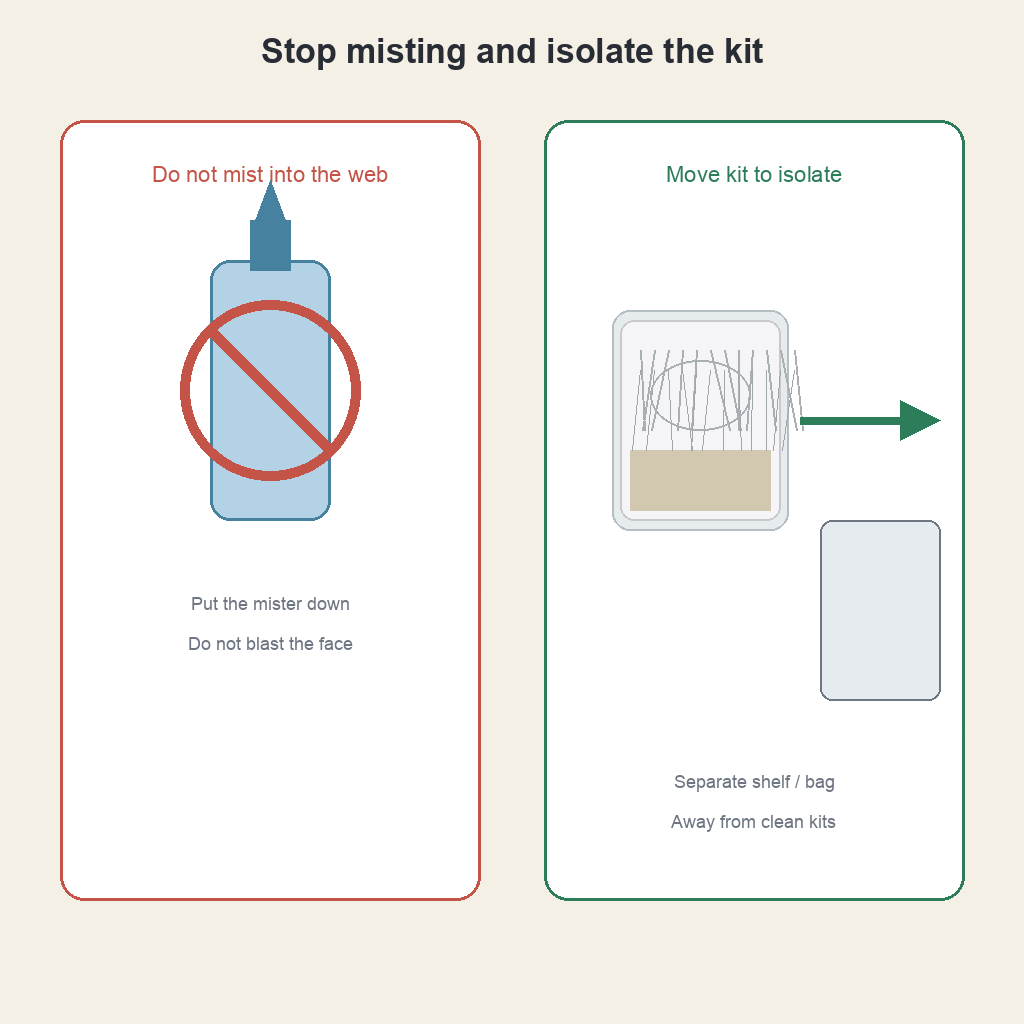
Pause misting directed at the grey film immediately. More water will not “wash it off.” If the face is already wet, open the bag shell for gentle air and leave the mister on the shelf for tonight.
Isolate the block
Move the kit away from other kitchen gourmet kits and fruiting projects tonight. Shared air and shared tools are how one web becomes a shelf problem. Even one clean oyster kit next to a webbed unit is enough reason to separate rooms if you can.
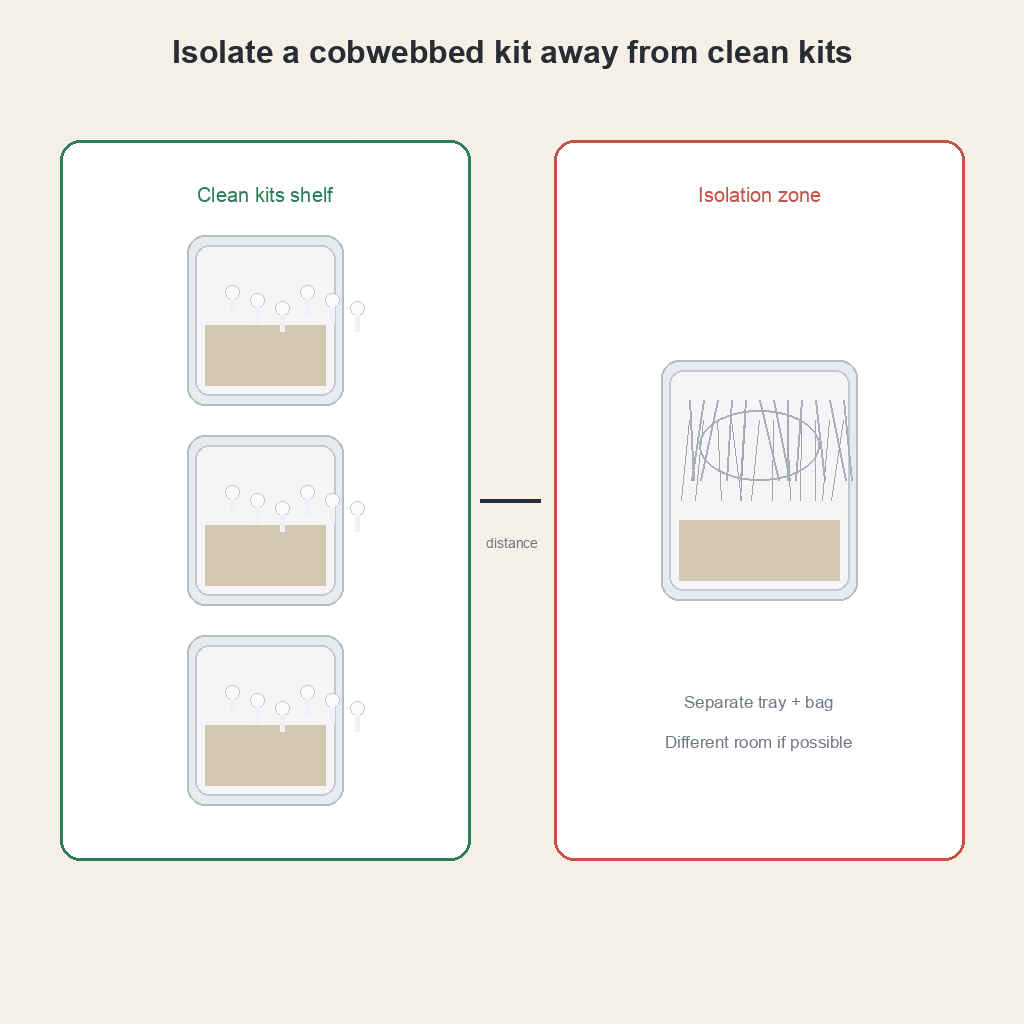
Do not scrape into kitchen air
Scraping spreads spores. Bag handling beats open-air carving on a counter every time. If you must close the unit, fold the bag and tape it shut outdoors or near a trash route — not over the cutting board.
Photograph and note smell
One daylight photo plus an odor note (mushroomy vs sour/musty) before you decide keep, isolate, or discard. Rate of change tomorrow matters more than one dramatic angle tonight. Write the time on the photo so you can compare honestly.
Wash hands and wipe the counter
Soap first. Optional 70% isopropyl alcohol spray on hard surfaces after handling — don’t pour alcohol onto the block. Keep a second clean fine mister for healthy kits only so you never share nozzles after a cobweb event. If the room itself feels like a sealed wet box, check temperature and humidity numbers before you open another gourmet kit on the same shelf. Tool links come after you finish keep / isolate / discard below.
Keep, isolate, or discard
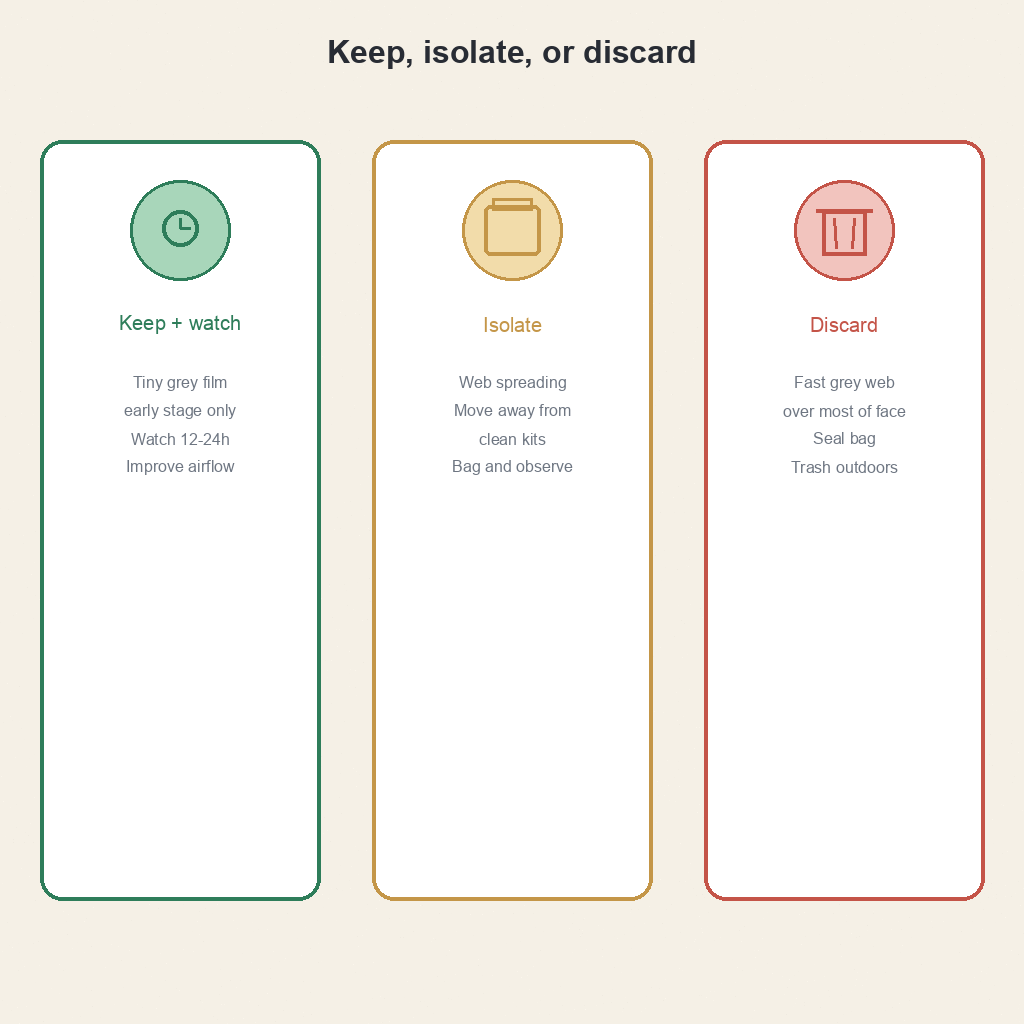
Use daylight photos and rate of change. Don’t decide from one dramatic flash photo at midnight. Smell and spread are the tie-breakers when the web looks “maybe thin.”
Branch A — Keep (watch closely)
Web is thin, brand-new (hours), limited to a tiny corner, no off odor, pins still look firm. Action: stop direct mist 12–24h, increase gentle air exchange, optional light surface peroxide only on the film (never soak the whole block), reassess next day. If the film expands overnight, you leave Branch A — you don’t double down. Write the time on a daylight photo so tomorrow’s comparison is honest, not hopeful.
Branch B — Isolate
Web is spreading across the face or among pins, or you run multiple kits in one apartment. Action: seal the bag loosely, quarantine in a separate room or balcony box, do not share misters, decide within 24–48h. Isolation is a decision tool, not a long-term storage plan. Move clean kits first when shelf space is tight — the sick unit stays put until the clean ones are safe.
Branch C — Discard
Web covers most of the fruiting face, pins collapse into mush, strong musty or sour odor, or web returns after a keep attempt. Action: bag the whole kit closed, trash outdoor bin if possible, wipe surfaces, restart later with a fresh edible kit. Don’t “bury and hope” indoors. Don’t carve the “clean side” for dinner as a default kitchen rule when the face is webbed. A sealed discard today beats a shelf of secondary webs next week.
Branch D — Reclassify
Color turns green or blue-green powdery → follow if the patch turns green. Yellow wet spots on caps during heavy fruiting → wet yellow spots on caps instead. No pins and a dry cracked face → if the real issue is no pins. Wrong branch wastes days. Right branch saves the rest of the shelf. If two symptoms show at once, isolate first, then open the matching hub — don’t stack random sprays while you shop for answers.
Once the branch is chosen, wipe counters and park a dedicated mister for clean kits only. If the room still feels like a sealed wet box, confirm temperature and humidity numbers before the next open. Concrete tool links sit in Prevent and What you might need after this decision section is finished.
Kit vs bags
The decision tree doesn’t change when the container gets bigger. What changes is how much you lose if you wait too long, and how carefully you isolate.
Ready-to-fruit kitchen kits
Faster decisions. The whole block is the unit. Restart cost is one kit, which is why a clean oyster restart is usually smarter than heroic scrapes. Kits teach the keep/isolate/discard muscle without a huge biomass bet. After discard, wipe the shelf with 70% isopropyl alcohol spray, keep a dedicated fine mister for clean kits only, and confirm the corner with a TempPro TP50 before the next open.
Grow bags / Path B projects
Same keep/isolate/discard logic. Higher biomass means stricter isolation from kit shelves. If you’re still learning how grow kits are supposed to run, fix kit habits before scaling bags. A bag project next to a cobwebbed kit on the same shelf is a bad roommate arrangement.
Shared apartment fruiting shelves
One cobwebbed unit can seed neighbors. Isolation is non-negotiable in small spaces. If you only have one shelf, that shelf becomes quarantine until you decide. Move clean kits first when you can.
Prevent next round
Air exchange without drafts
Brief fresh air beats sealed stillness and HVAC blast drying. Open a tent on a schedule; don’t leave it locked wet for days.
Mist for dew, not puddles
Fine mister only. The face should glisten, never pool. A continuous ultra-fine spray bottle is the tool swap most kitchen growers need after a cobweb event.
Stagger kit opens
Don’t open five gourmet kits the same day in one bathroom. Attention and airflow both run out.
Clean tools between kits
Scissors, mister nozzles, and humidity tents get wiped between projects. Keep a bottle of 70% IPA spray near the shelf so the habit sticks.
Check the room, not just the bag
A cheap digital hygrometer tells you whether the room is a stagnant humidity trap or a desert HVAC blast. Fix the room before you blame the next kit. For tool roles, see fix misting and airflow tools.
Common mistakes
- Scraping the grey web into kitchen air — spreads spores and rarely removes the colony. Bag the unit; don’t carve it open on the cutting board.
- Calling every white fluff cobweb — healthy mycelium and early pins get sacrificed by panic. Compare structure and speed before you trash an edible kit.
- Keeping a fully webbed smelly block “one more day” next to clean kits — isolation delay costs the shelf. If it smells sour or musty and the web is broad, you’re not being patient — you’re being optimistic with other people’s dinner projects.
- Bleach-soaking the entire edible block — harsh soaks wreck gourmet fruit more often than they save it. Surface hygiene is for counters and tools, not a full-block bath.
- Restarting without fixing stagnant humidity habits — new kit, same sealed tent, same cobweb. Change the air plan before you spend again.
What you might need
Products show up after the decision tree, not before stop-loss. Roles only — not a shopping dump.
Surface sanitizer (70% IPA spray)
Wipe counters and tool handles after isolation or discard with RAPID PROTECTANT 70% IPA. Keep it off the block itself.
Fine mist bottle
Resume correct misting only on clean kits. The SUPER+ fine mist 2-pack beats a kitchen sink sprayer for dew control.
Hygrometer
Confirm whether the room is the real problem. The TempPro TP50 is enough for kitchen-scale checks.
Fresh gourmet oyster kit
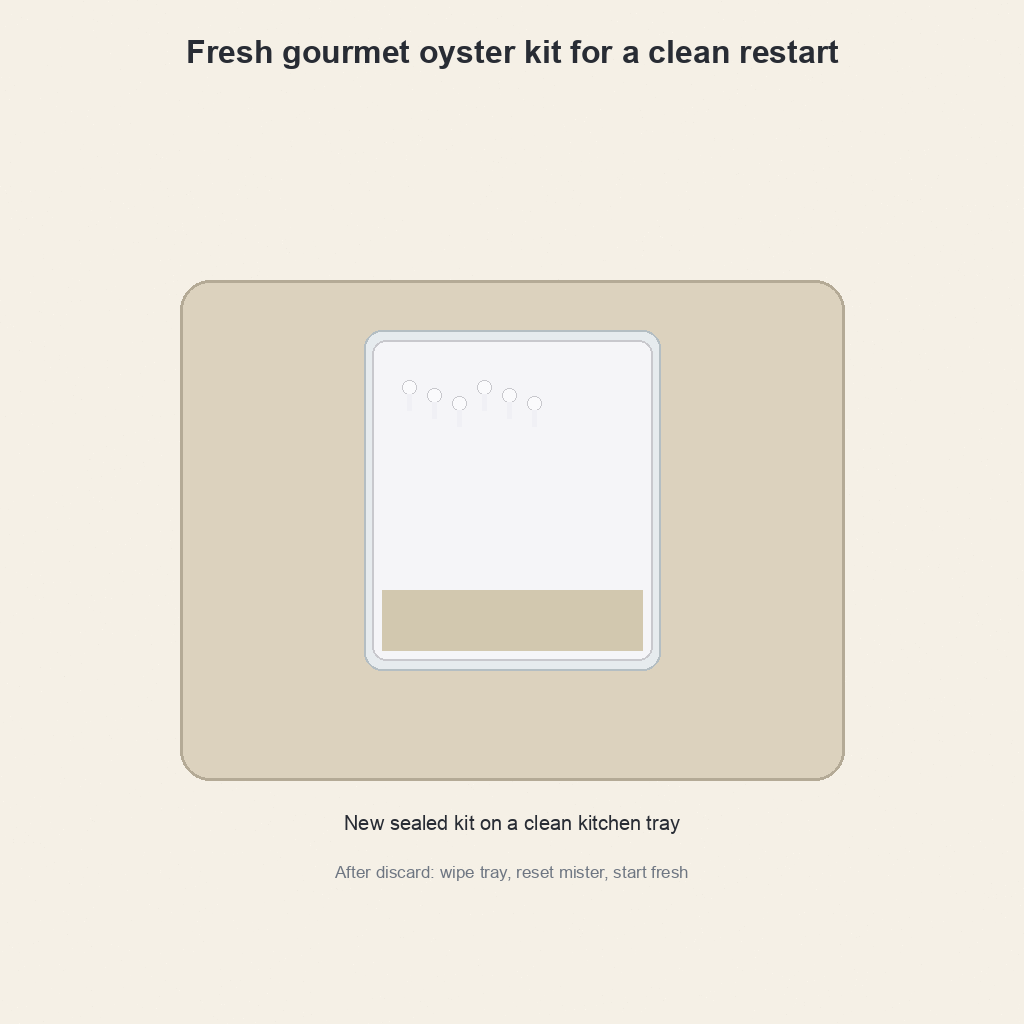
Clean restart after discard. Default edible kitchen species: Back to the Roots oyster grow kit. Open it the way how grow kits are supposed to run describes — modest cut, bag on, dew mist. Place the new kit where the old one failed only after you fix air and tool hygiene.
Before you open the restart, check the shelf with a TempPro TP50 so you are not dropping a fresh edible kit into the same stagnant wet corner. Still unsure which symptom path you are on? Use the symptom checker before you buy another block.
If the restart is for a dry HVAC kitchen, pair the new oyster kit with the same fine mist bottle habit you should have used the first time: dew only, no puddles, daily air.
Related
- Contamination overview framework for multi-symptom cases
- If the patch turns green when color flips
- Fix misting and airflow tools when air is the root cause
Key takeaways
- Cobweb is fast grey webbing on gourmet kits — not automatic green mold and not healthy mycelium.
- Stop spraying the web, isolate first, then keep / isolate / discard.
- Do not scrape into kitchen air.
- Fix humidity and airflow before buying another kit.
- Culinary edible grows only — no actives content on this site.
Culinary / edible kitchen growing only. FungiAtHome does not cover psychedelic or actives cultivation.